Wednesday, February 20, 2019

Beyond Budapest: The Artist's City of Szentendre

We had the opportunity to go on two day trips to Szentendre and Eger while with Babilon, and both were positively beautiful. It’s probably going to be hard to capture the magic of the quiet of these towns compared to Budapest’s hustle and bustle, but I’ll try.

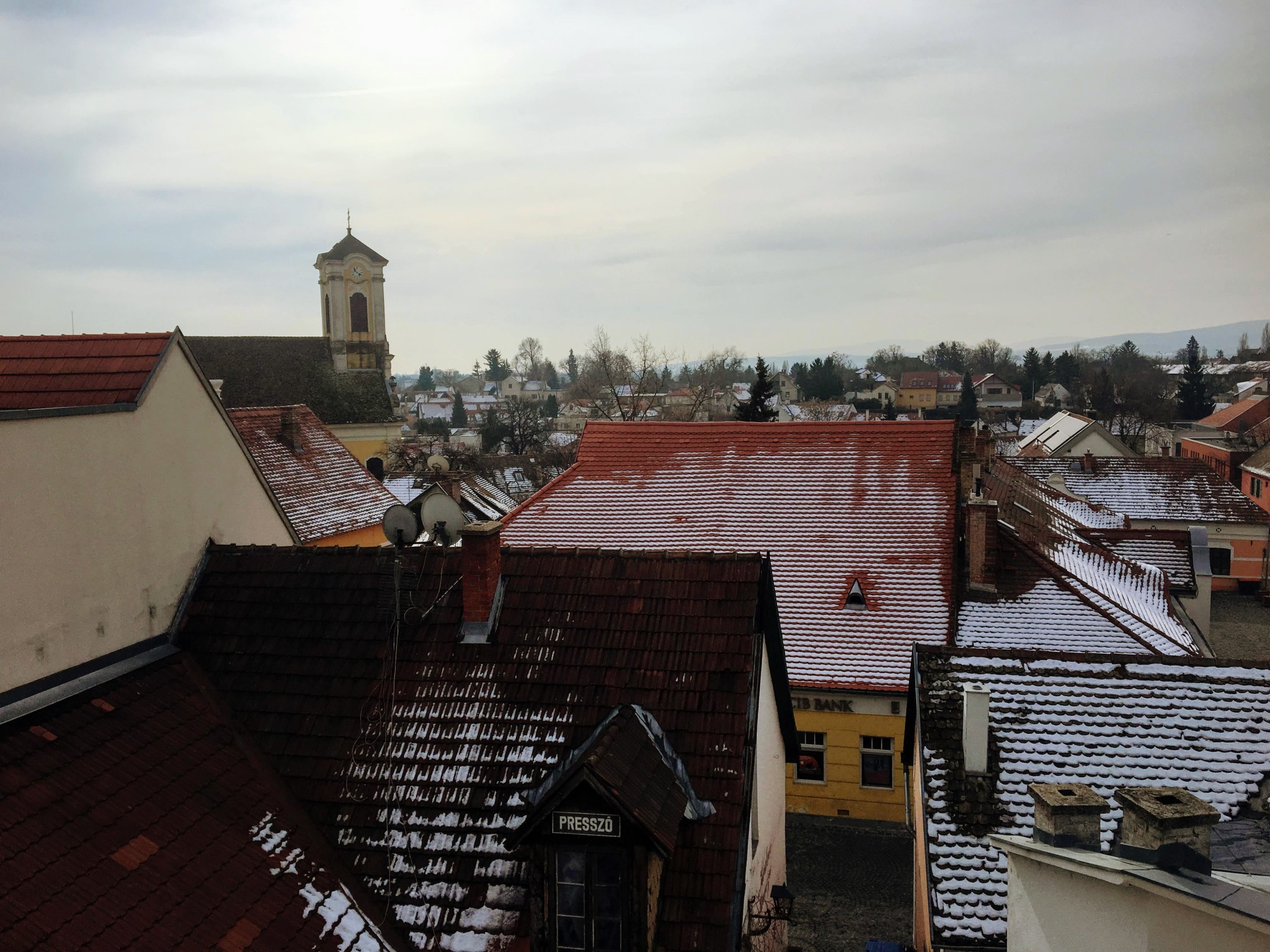
Szentendre is a village to the north of Budapest that’s ridiculously easy to get to via train (we took the train to Esztergom and got off after about an hour). It’s quiet this time of year, and relatively cold and grey. After disembarking from the train, we set off immediately towards the city center, in our lovely guide Emese’s capable hands.

IMG_1648
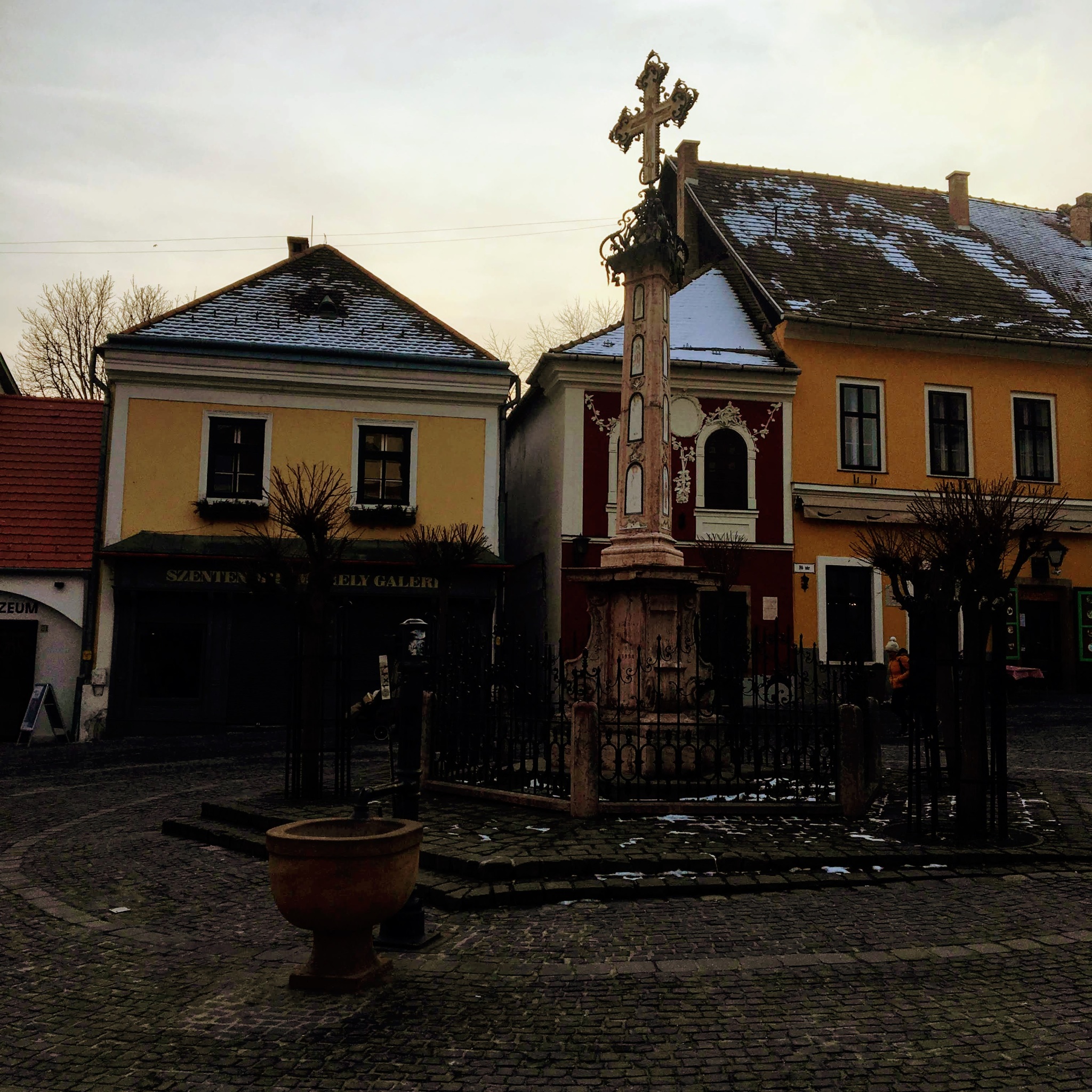
 It had snowed that week (as it does), so the vibe was definitely cozy and intimate.
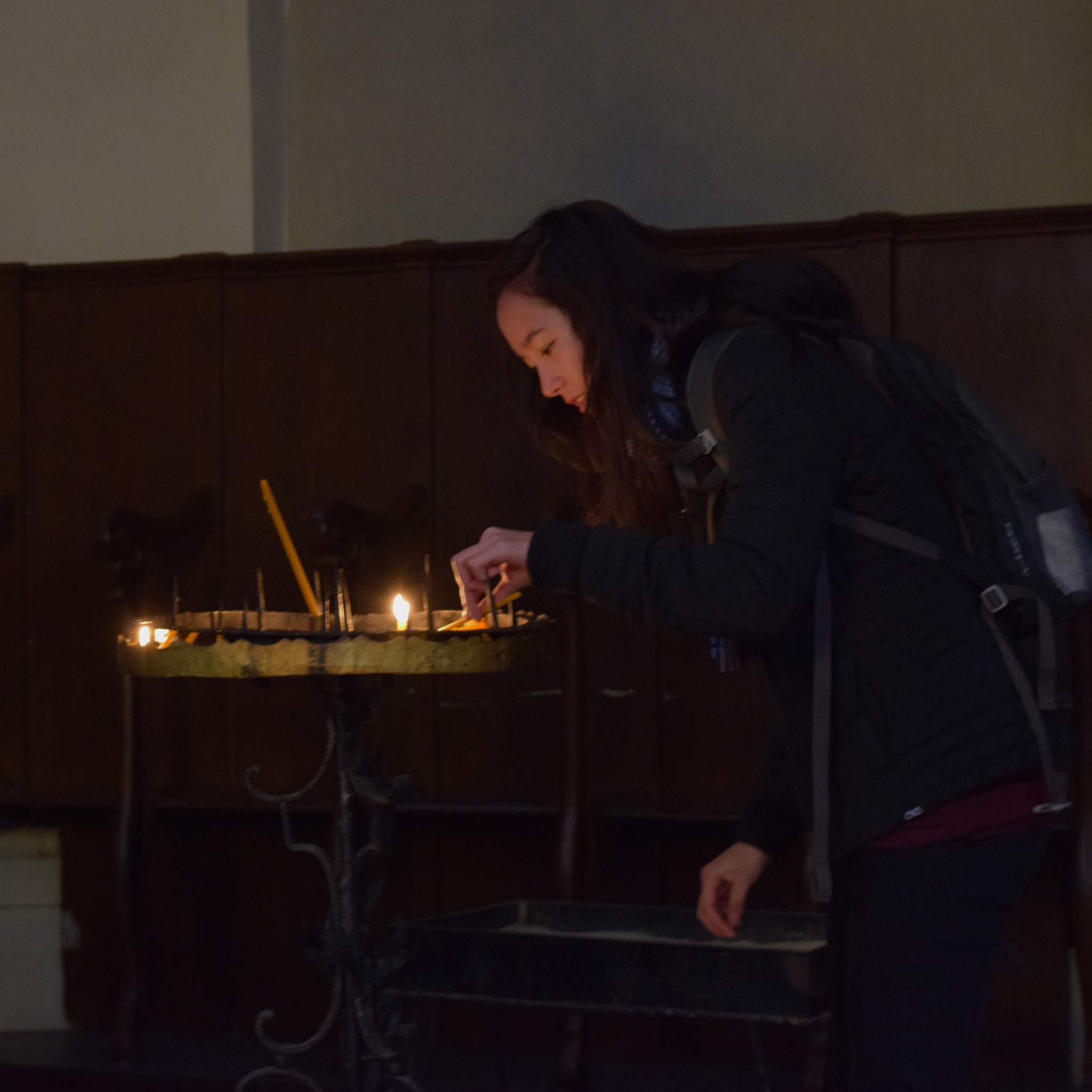
We started the day by walking and taking in the charming village, stopping at Blagovestenska Church, a Serbian Orthodox church. With Emese’s help translating, an old woman, the only soul in the building, told us a bit about the contrasts between the Serbian Orthodox and Eastern Orthodox traditions—she should know: she is the former while her husband is the latter. Gesturing towards the Christmas decorations still displayed in the nave, she told us that in the Serbian Orthodox church it’s traditional to have an oak tree, not an evergreen tree, as a Christmas decoration—so her family ends up getting two trees every year.

DSC_0283
I lit a candle in the church after giving a small donation. I figured better here, in a peaceful, quiet place than somewhere like the Vatican. (PC the incredible Lia Bozzone)
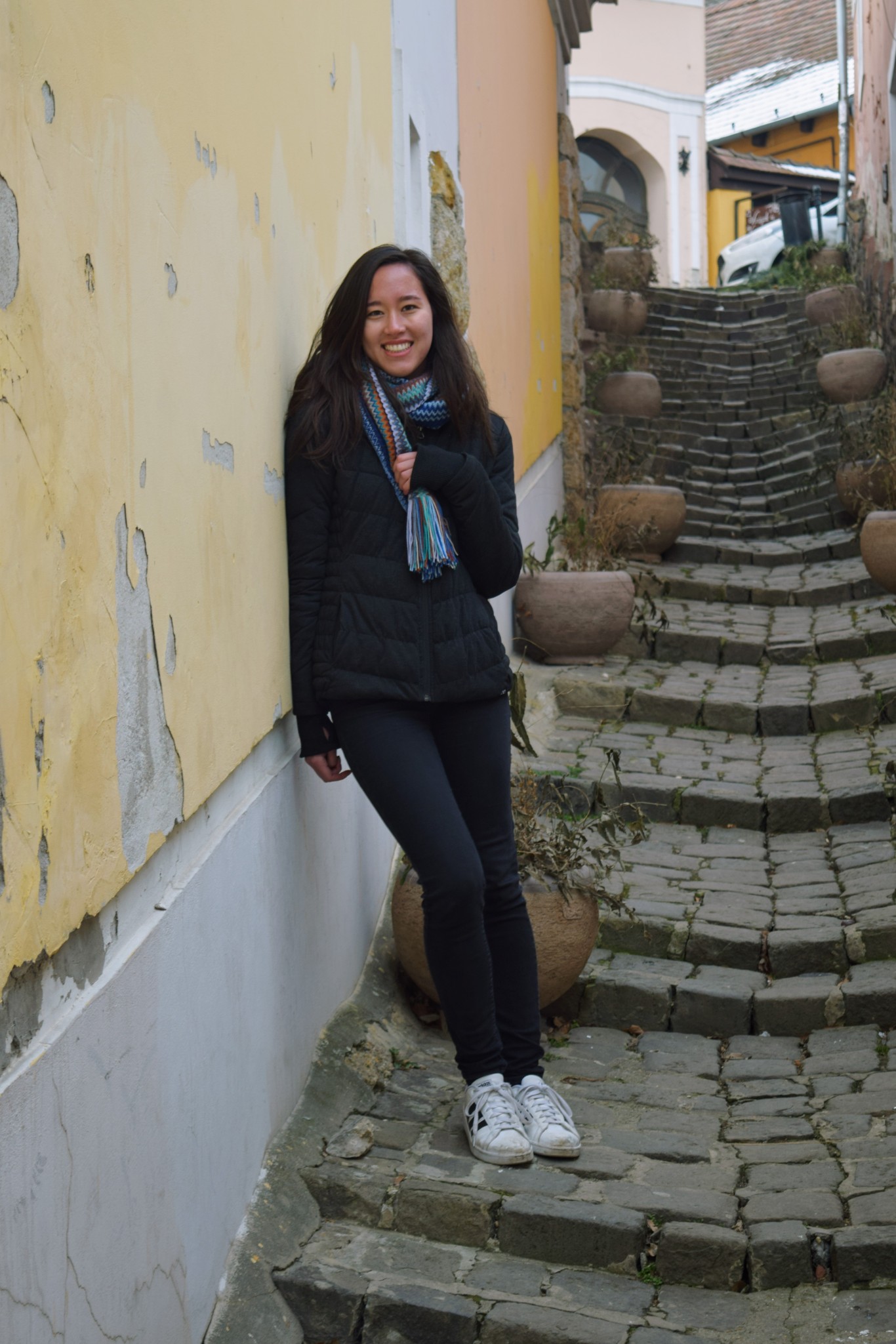
We had some free time after lunch, during which Lia and I spent some quality time walking on the cobblestone streets and taking some nice photos.

DSC_0686 (1)
Glamor shots! (Lia Bozzone)
I didn’t understand why this trip was marketed as “the artist’s village” until after lunch. We visited two places that really highlighted the value of artistry and craftsmanship, meeting three women intensely passionate about things I would not have considered art before that day.

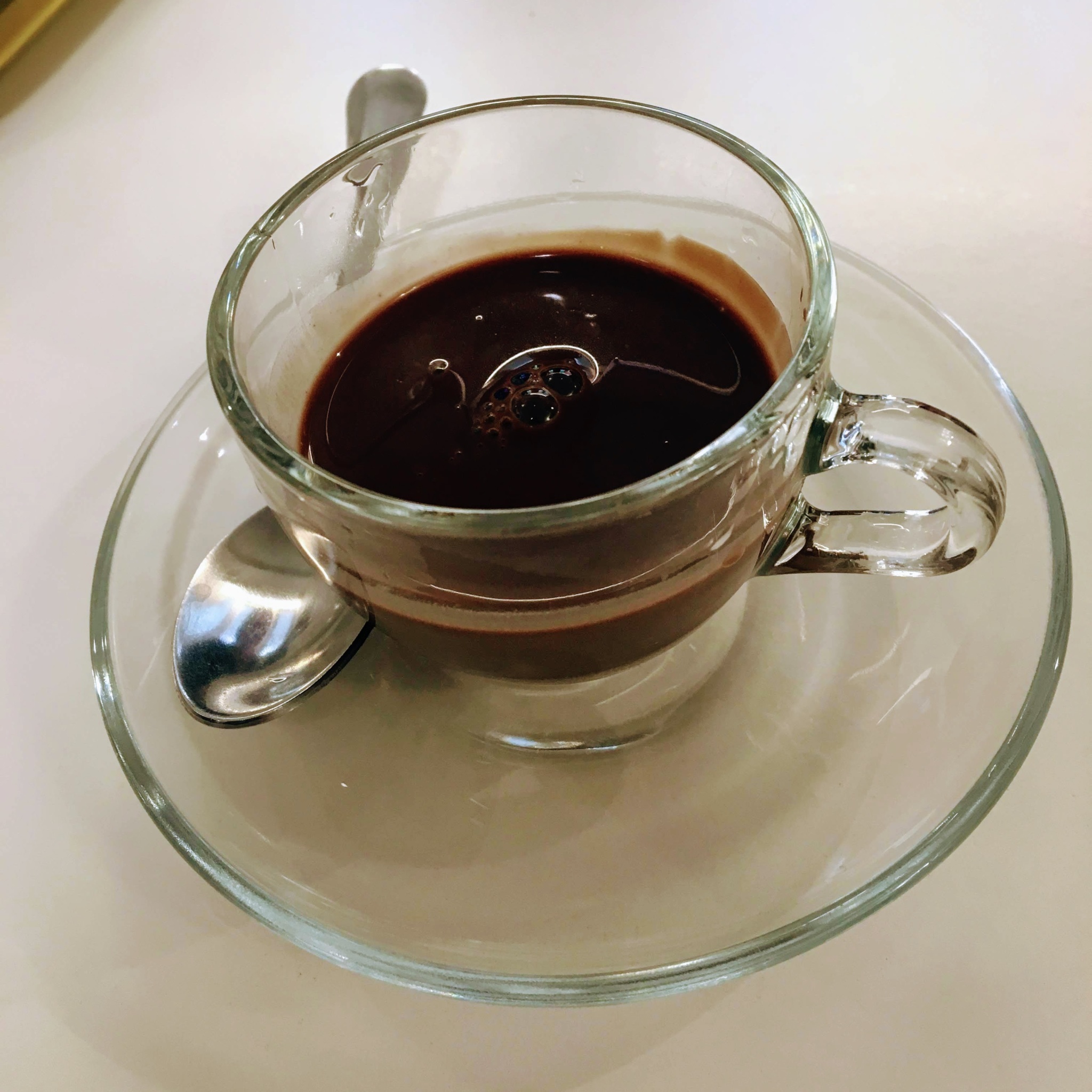
Our first stop was, of all things, a chocolate shop where the owner treated us to a tasting of “single origin chocolate” (and to some of the best hot chocolate I’ve ever had). She called her passion “coco culture,” which seemed a little silly at first, but upon putting the deep, rich chocolate on my tongue and tasting actual floral notes, coco culture immediately rocketed its way past wine and cheese in my grand ranking of luxury-item culture.

IMG_1650
Think hot chocolate, but richer and darker and thick like custard. I could probably drink enough of this stuff to become comatose.
We also stopped by a traditional weaving shop, where a mother and a daughter were finishing a long shawl under the supervision of the head weaver, who spoke of weaving with a sparkle in her eyes. We saw her weave to finish the shawl for the mother and daughter, who had been there four hours that day. The head weaver wove like breathing, the shuttle moving back and forth between her hands like a heartbeat. When it was time to cut the strands and finish the shawl, Emese translated for us: “it’s hard to finally make the cut. Like seeing a child grow up.”

The highlight of the day, though, winding the cobblestone roads as the sun slowly set, was a small Hungarian folk art shop called Blue Land. The owner, Ilona a talkative and friendly woman with a lovely old dog, excitedly showed off the deep blue hand-printed clothes, the painted eggs from different regions of Hungary, the traditional Christmas ornaments made of recycled food items (dried orange peels, mushrooms, peppercorns, etc.) and corn husk dolls that Hungarian grandmothers immemorial had made for their granddaughters. Under Ilona’s watchful eyes and lilting English, each carefully-made item told a different story about the folk culture of the nation.

My friend Lia and I each bought a lucky charm there: a small baby doll nestled in a walnut shell, decked out in some of the beautiful royal-blue printed cloth. These lucky charms are meant to be gifts, and Ilona showed us the correct way to give them to someone else- from our right hand to the receiver’s left, to “complete the circle.”

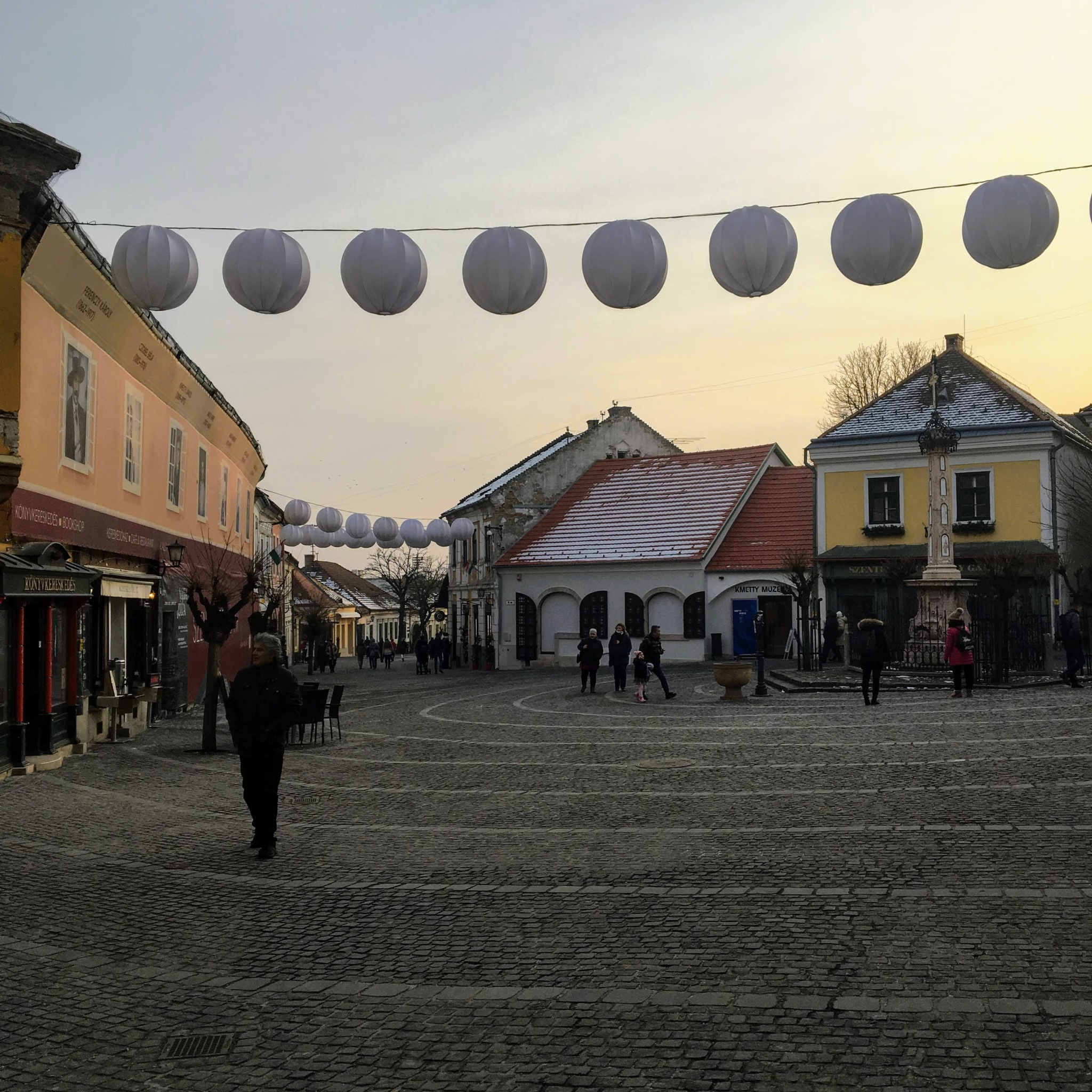
Lia and I spent the rest of the day walking along the river of the town, and as evening set on the quiet day we remarked at how unabashedly beautiful it all was, and how we couldn’t wait to return.

IMG_1682

IMG_1655

Saturday, February 16, 2019

Budapest Glamor Shots + Thoughts about Hungarian

A backlog of posts has led me to the efficient conclusion that this post will have two goals: to give a sense of how amazingly beautiful Budapest is with the help of some glamour shots... and to note some initial impressions of the Hungarian language.

IMG_1698
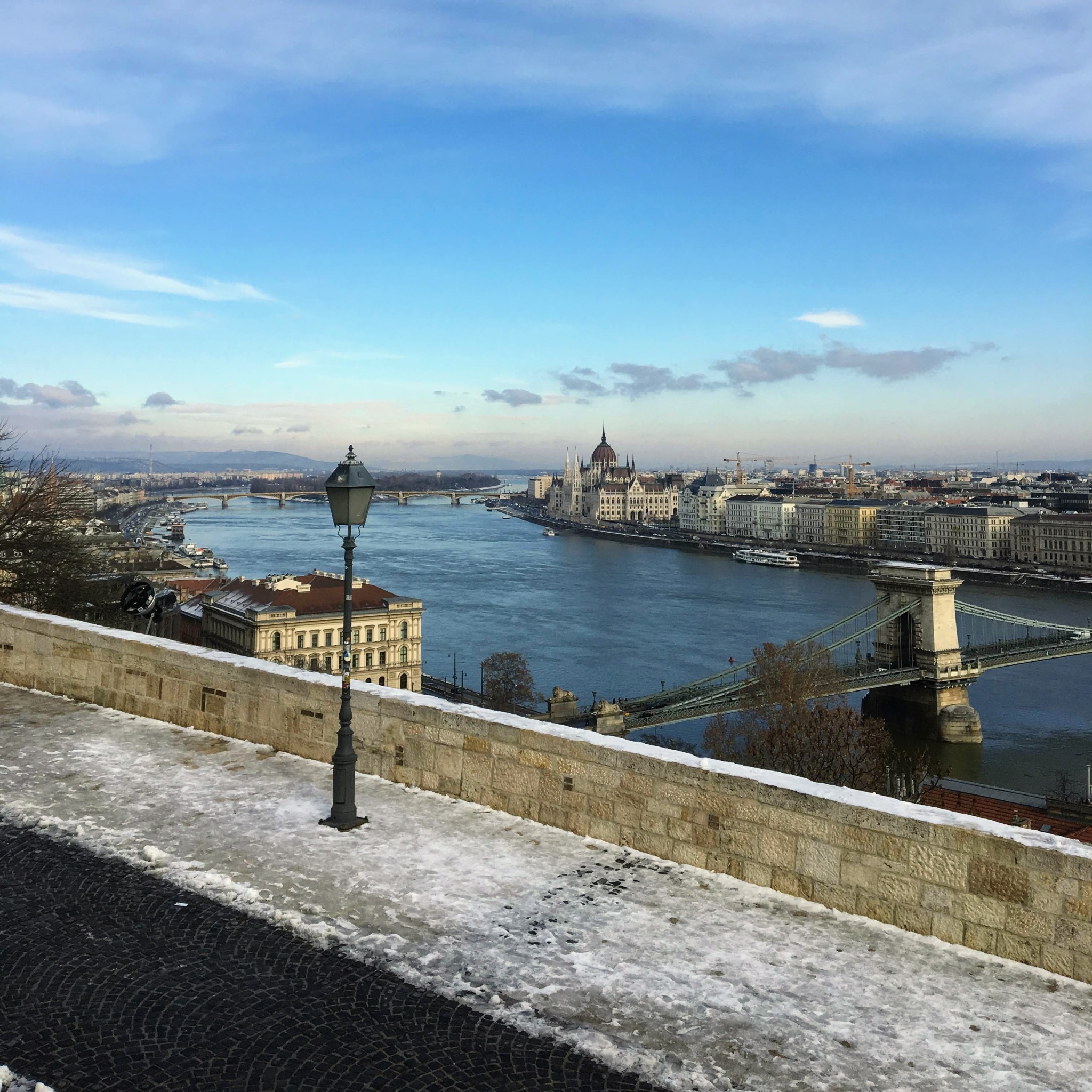
What, a beautiful photo already?? The view of the Pest side from Buda castle (fyi, Budapest is called so because it used to be two different cities, Buda and Pest).
My first three weeks in Hungary have been occupied with taking courses with the Babilon Language Studio in Budapest with the other BSM and AIT-ers (AIT is a similar program to BSM, except for computer science students). All in all, the course was quite effective in teaching essential Hungarian (the teachers seemed especially fond of board games) and I would definitely recommend the course for anyone looking to get a basic grasp of the language.

Now that the language classes have officially come to an end (and the math begins), I wanted to take some time and jot down my impressions of Hungarian— it’s quite unlike any other language I’ve encountered!

Throughout the course, our instructors emphasized the fact that Hungarian is an “ancient language,” relatively unchanged from its Asiatic roots. Our guide for the day trips, Emese (pronounced “Em-eh-sheh”) even claimed that if she were to travel to central Asia she could hear the similarities in the languages there and if given enough time would be able to understand and communicate effectively there.

IMG_1563
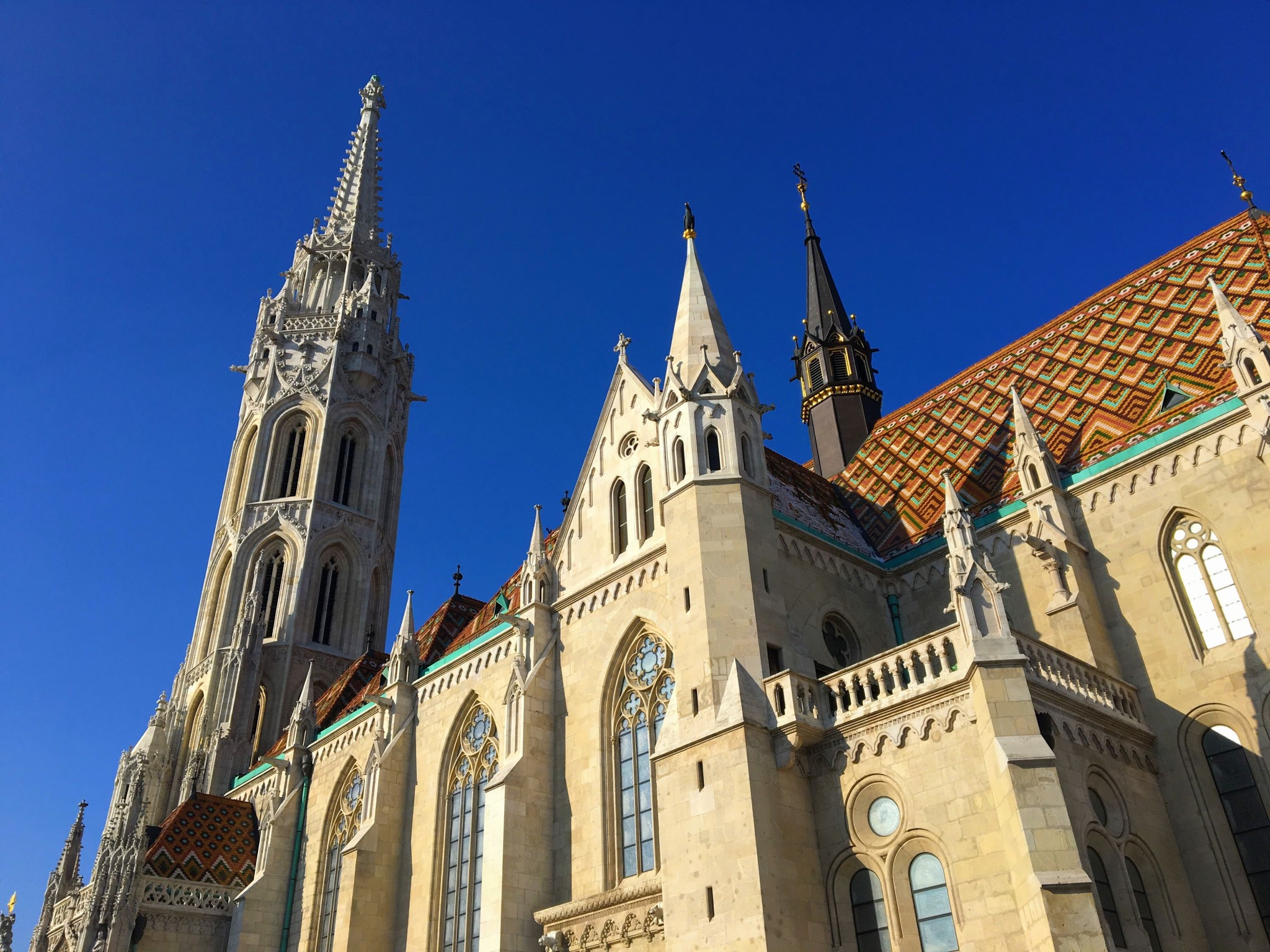
For some reason this lovely building on the Buda side is called the Fisherman's Bastion, but it's anything but a fisherman's shack. It may be my favorite spot in the city to run to...
It’s a language that gives impressions of both east and west, influenced by both the Austrians and the Ottoman Turks. Hungarian depends heavily on vowel harmonies and word suffixes for meaning. Suffixes are attached to words depending on the vowel harmonies on the word and can indicate anything from verb tense, to plurality, to the accusative/objective form.

The existence of an accusative form is interesting because as we were told repeatedly, word order in Hungarian is relatively free. For example, take the following English sentence:

“Tomi loves Csilla.”

English word order makes it clear that Tomi is the subject, Csilla is the object. In Hungarian, both of the following sentences mean the same as the above:

“Tomi szereti Csillát.”

“Csillát szereti Tomi.”

Word order plays a role in which words of the sentence are emphasized (as this helpful Duolingo article points out), but not what the sentence as a whole means.

IMG_1770
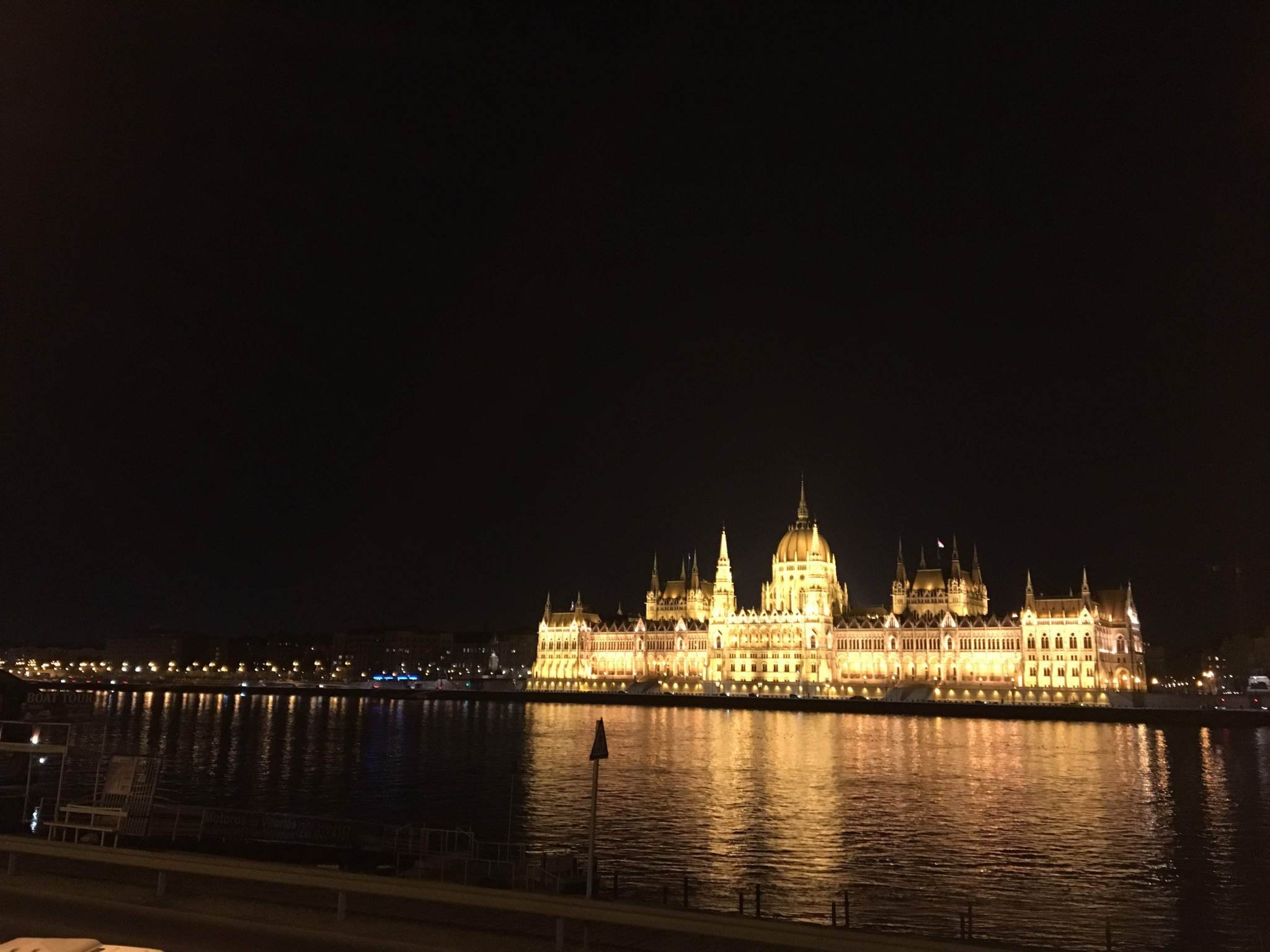
Phew, grammar sucks. Please enjoy this night view of Parliament if you are getting bored of my ramblings.
Another interesting verbal tick that I’ve noticed is the all-too-frequent filler word “Jó,” which at least on the face of it means “good,” as in “Jó napot” (good day) or “Jó reggelt” (good morning) but which practically functions as a kind of filler word that Hungarians seem to sprinkle between sentences and to fill the silence (less frequent but also used are "szuper” and "okay")

One of the hardest things for me to internalize when beginning to learn the language is the pronunciation of the Hungarian alphabet. Thankfully, Hungarian is a language where the pronunciation remains consistent throughout the language (unlike English, as our teachers never failed to remind us), but getting used to the fact that “s” is always pronounced “sh” took quite a bit of time—also note that the city’s name is pronounced “Budapesht,” despite the fact that you may come across as a bit pretentious in America if you emphasize the “sht” a too much. I still am not totally sure how to pronounce the “gy” sound (which is unfortunate because it appears everywhere from the number one—egy—to the word for onion—hagyma), and Lord help me with all the accented variations of the vowels that must be distinguished in order to spell correctly—there are four versions of the letter “o” here: o, ö, ó, and ő!

IMG_1551
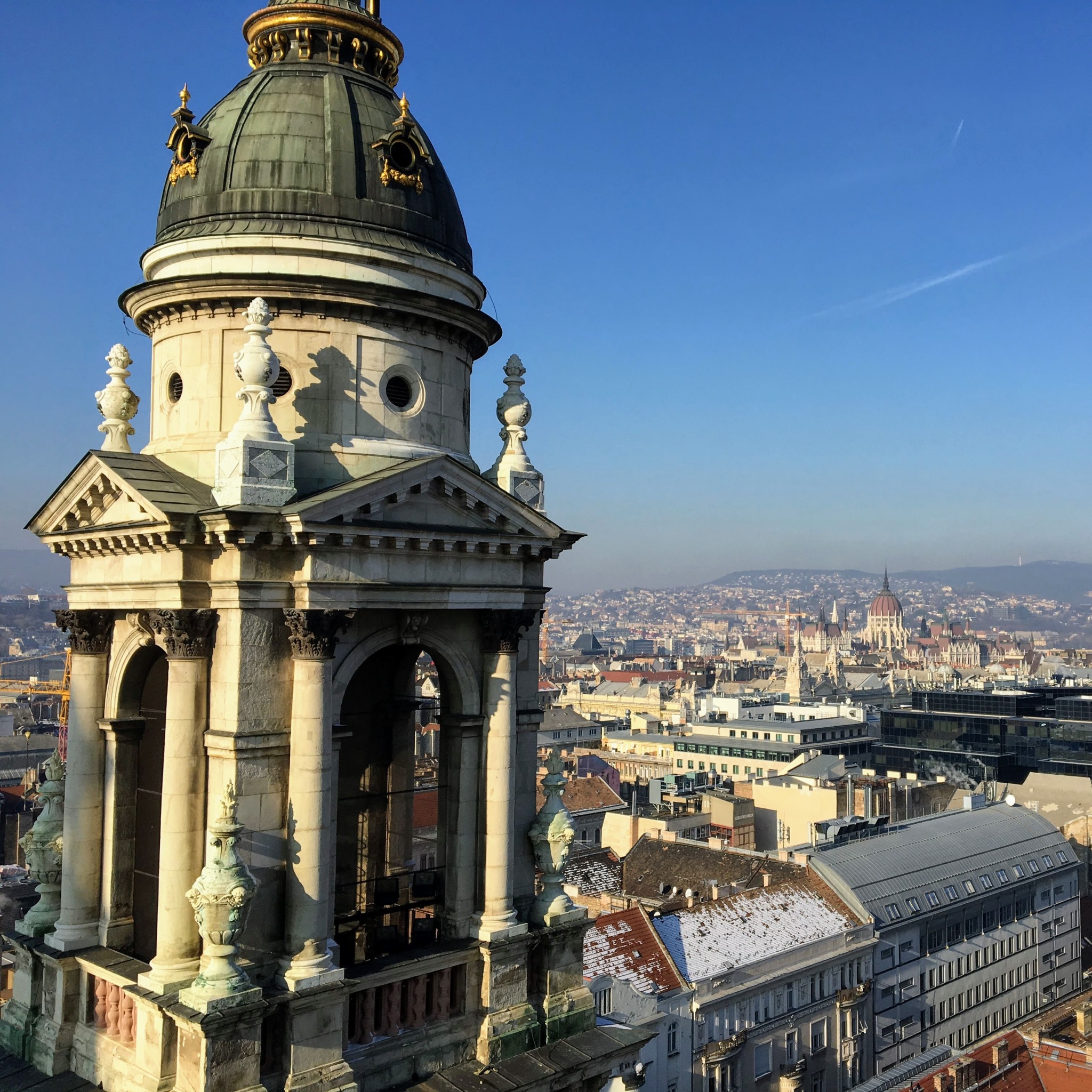
The view from St. Stephen's Basilica. St. Stephen was the first Christian king of Hungary, and you can visit his actual hand in the reliquary.
My Hungarian moment of triumph came at a Fornetti (one of those pastry shops in the subway) when I stopped for a pastry and saw the word “túró-taska.” My heart skipped a beat—I knew what that meant—cream cheese bag! I was so excited that even though I was going to get something chocolatey I ordered it on the spot. “Egy túrós-taskát kérek.” It was a miracle exchange, just like in class: “Más valamit?”

“Nem, Köszönöm.” He said the price. I handed over the money. It was beautiful! And since then on rare occasions, when I mutter Hungarian to mask my American accent I’ll sometimes get lucky enough to get a Hungarian response.

All in all, I have to thank Babilon for taking in a group of about seventy or so Americans with thick, blundering tongues and making semi-decent tourists out of us!

IMG_1624
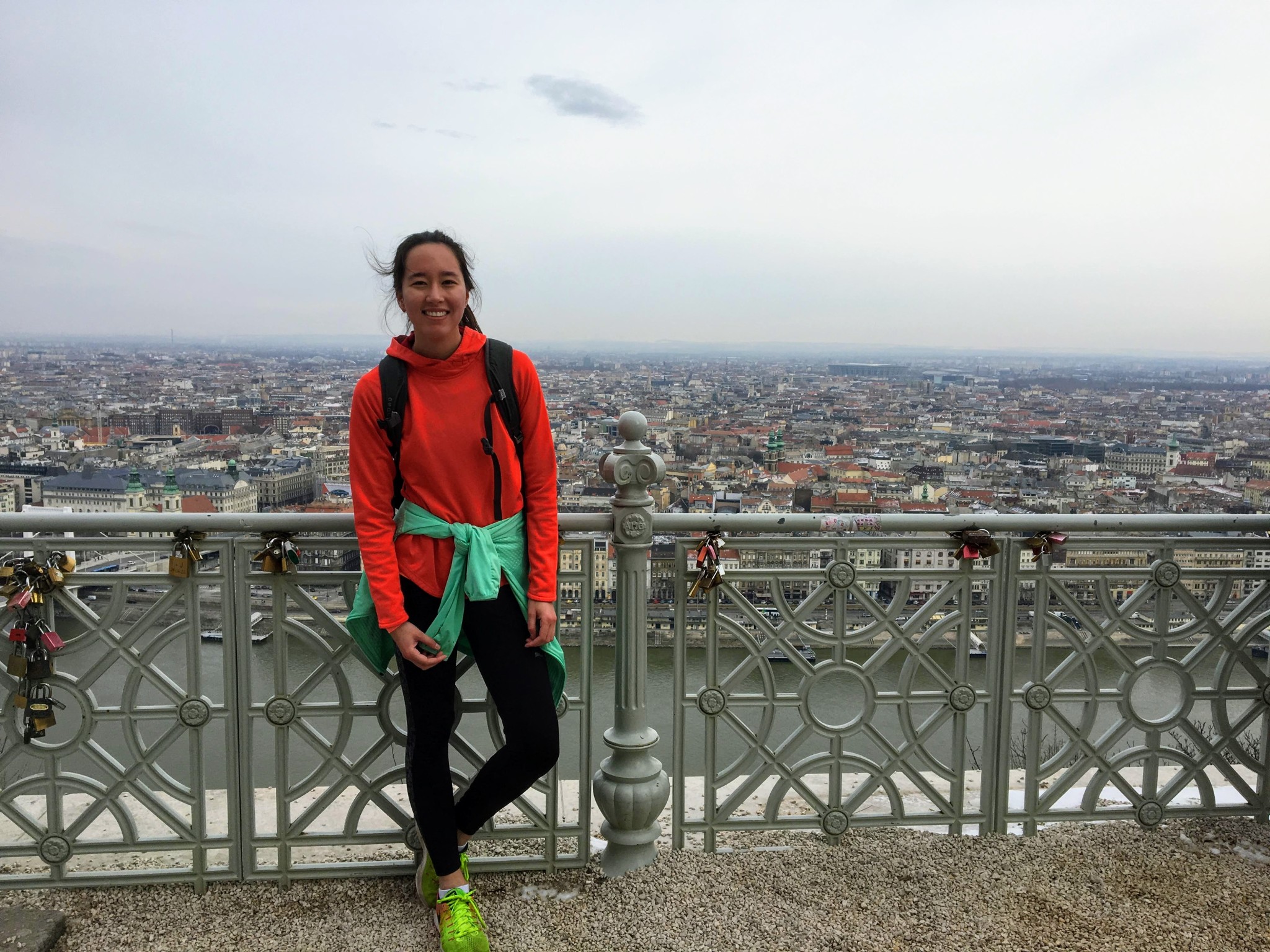
Feeling like a traffic cone on the Citadel on a cloudy day...

Saturday, February 9, 2019

Hungarian Food: Impressions

My first reaction to Hungarian food was that it’s not very photogenic. In the first week, the Babilon Language School took us to a small restaurant in Taksony for a sampling of the Hungarian culinary tradition, and after I had loaded my plate with all manner of roasted pork, stuffed cabbage, and other stewed meats and grains, I thought to myself “the only two colors on my plate are white and red.” So besides the fact that I was ravenous and couldn’t wait to dig in, that’s the unfortunate reason I didn’t take a photo of the food.

Luckily, when we went to Eger (more on that later) our bubbly guide Emese took us to a glorious contemporary restaurant that served Hungarian food but very prettily. So without further ado, a glimpse of the Hungarian palate:

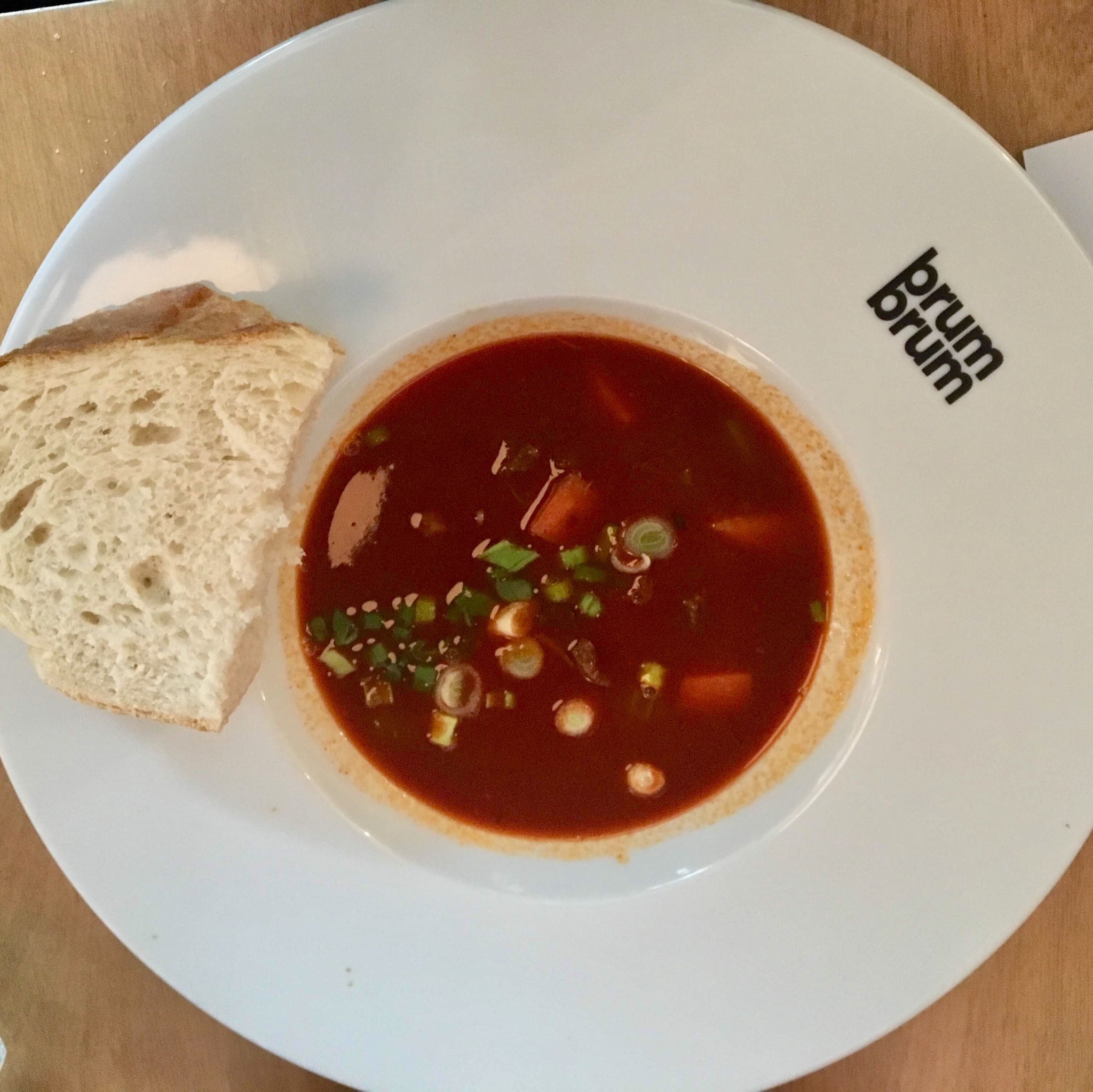
img_1737-1
The first course: the famous Hungarian goulash. This version featured a rich beef base thick enough to coat the back of a spoon (and blood red to boot) but I’ve also had less fancy more soup-like variants of this delicious, paprika flavored dish.

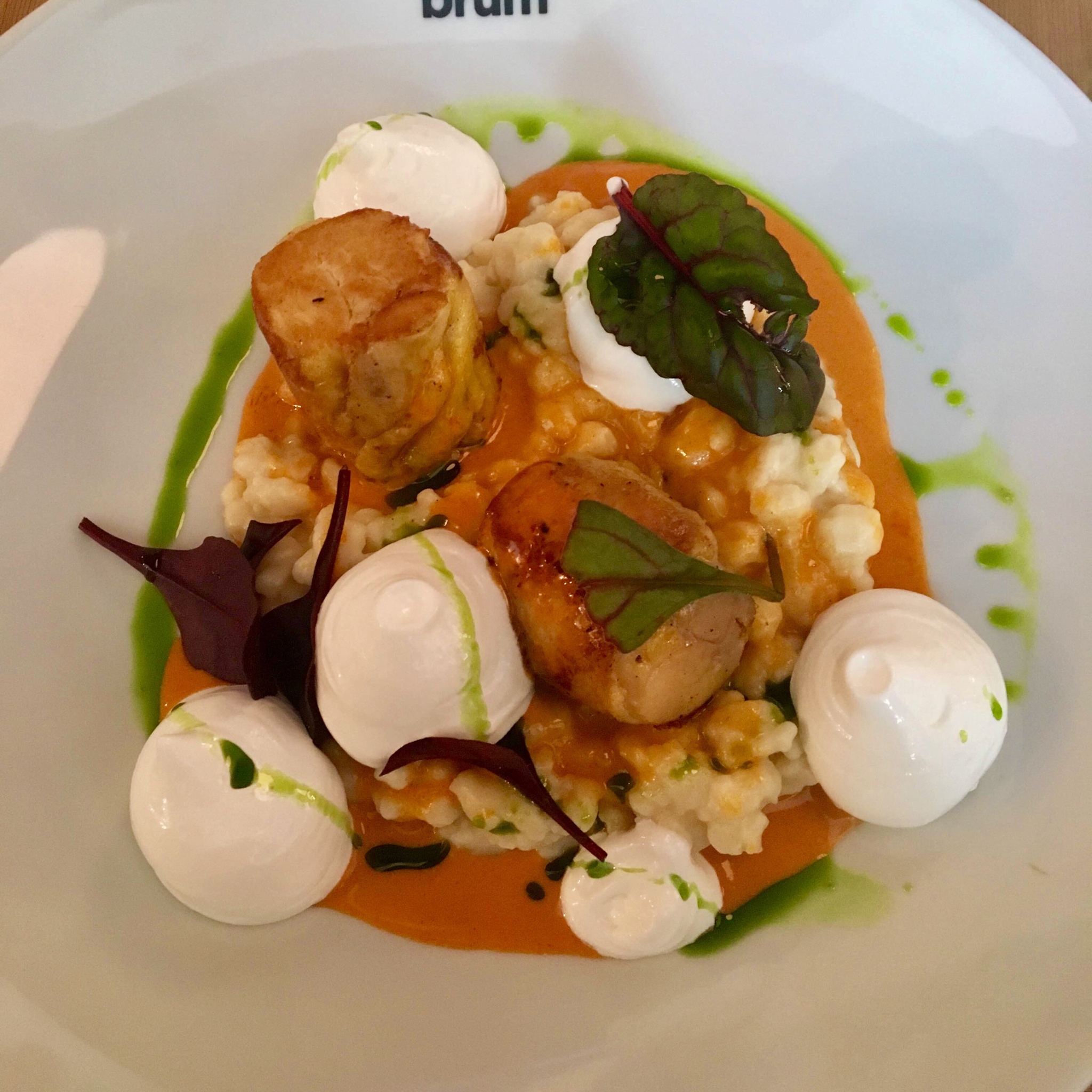
img_1738-1
The main course was a lovely chicken paprika dish with an egg noodle base, a modern take on chicken paprikash. Note the heavy use of tejfol here!

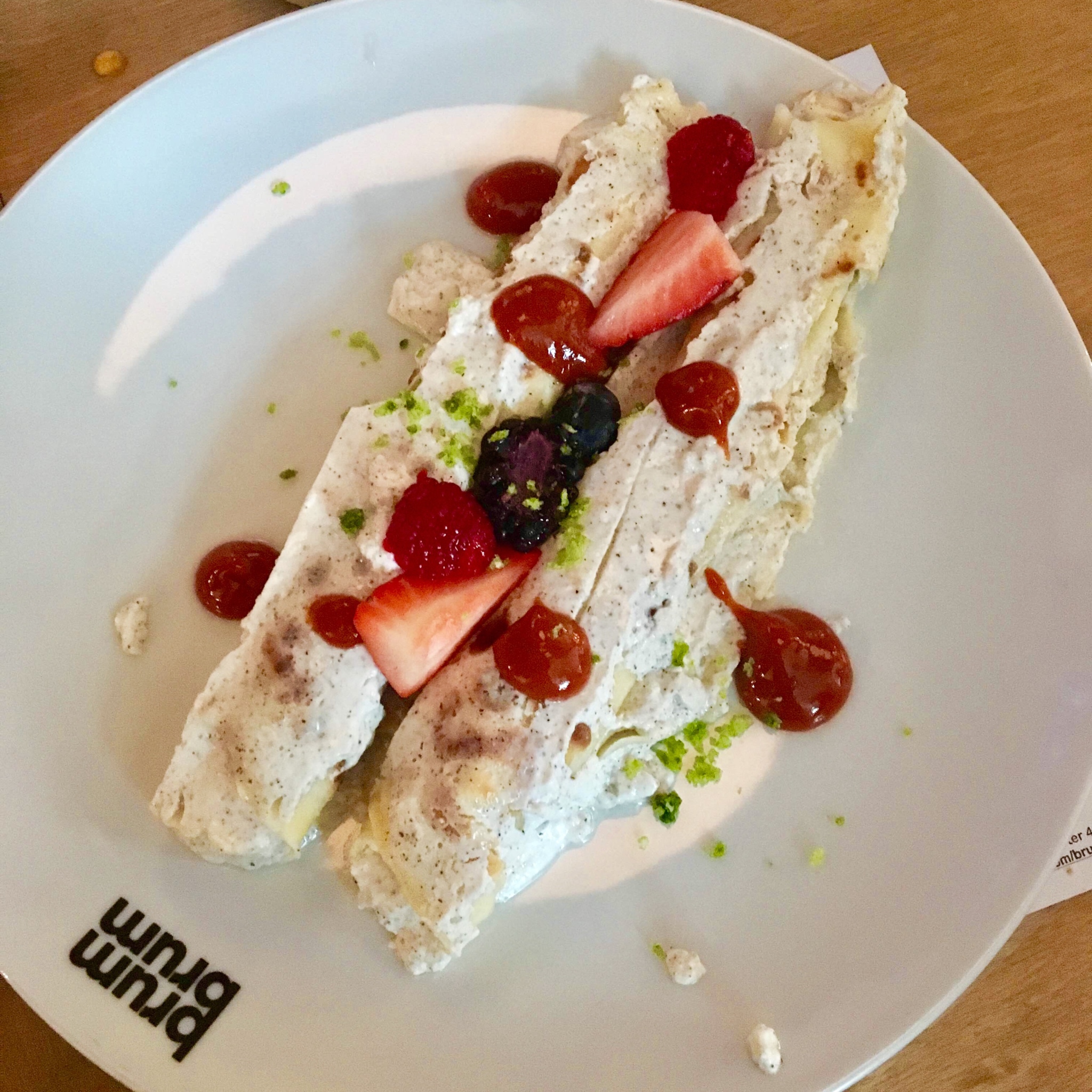
img_1739-1
Dessert was Hungarian pancakes. When I first heard “Hungarian pancakes,” I was expecting latke-like things, but these are sweet crepes stuffed with túró and topped with apricot jam and berries.
The stars here are meat and dairy. Hungarian food is very heavy and not very vegan friendly (at all). But with all the fat and spices, it’s honestly objectively delicious, even if it’s not the best diet for avoiding heart attacks.

I have three major observations about the food:

1. One of my new favorite ingredients is the Hungarian tejfol (pronounced “tay-fol”) which is an interesting mix of sour cream and yoghurt that’s perfect for cutting through all the fatty spicy meat and sausage, or for dolloping on a bowl of thick goulash. In the previous picture, there are about 2 pints’ worth of tejfol dolloped on the main chicken dish. Two of my friends on the program like to joke about how they killed a liter of sour cream here within a week thinking it was Greek yoghurt (mixing with peanut butter and such) before they realized otherwise, but honestly, I think it's an understandable mistake. Tejfol tastes more like yoghurt to me than American sour cream. I’ve put a little in oatmeal to make it creamy and it’s pretty good.

2. If the “white” in Hungarian food is all that tejfol and carbs and such, the red is definitely paprika (Hungarian for the Cubanelle-like peppers that are cheap and ubiquitous here). Paprika, paprika powder, paprika paste (which comes in toothpaste-like tubes), and all derivations of the spice are in everything here. Which means, at least according to me, that Hungarian food has all the heaviness of British food with none of the blandness!

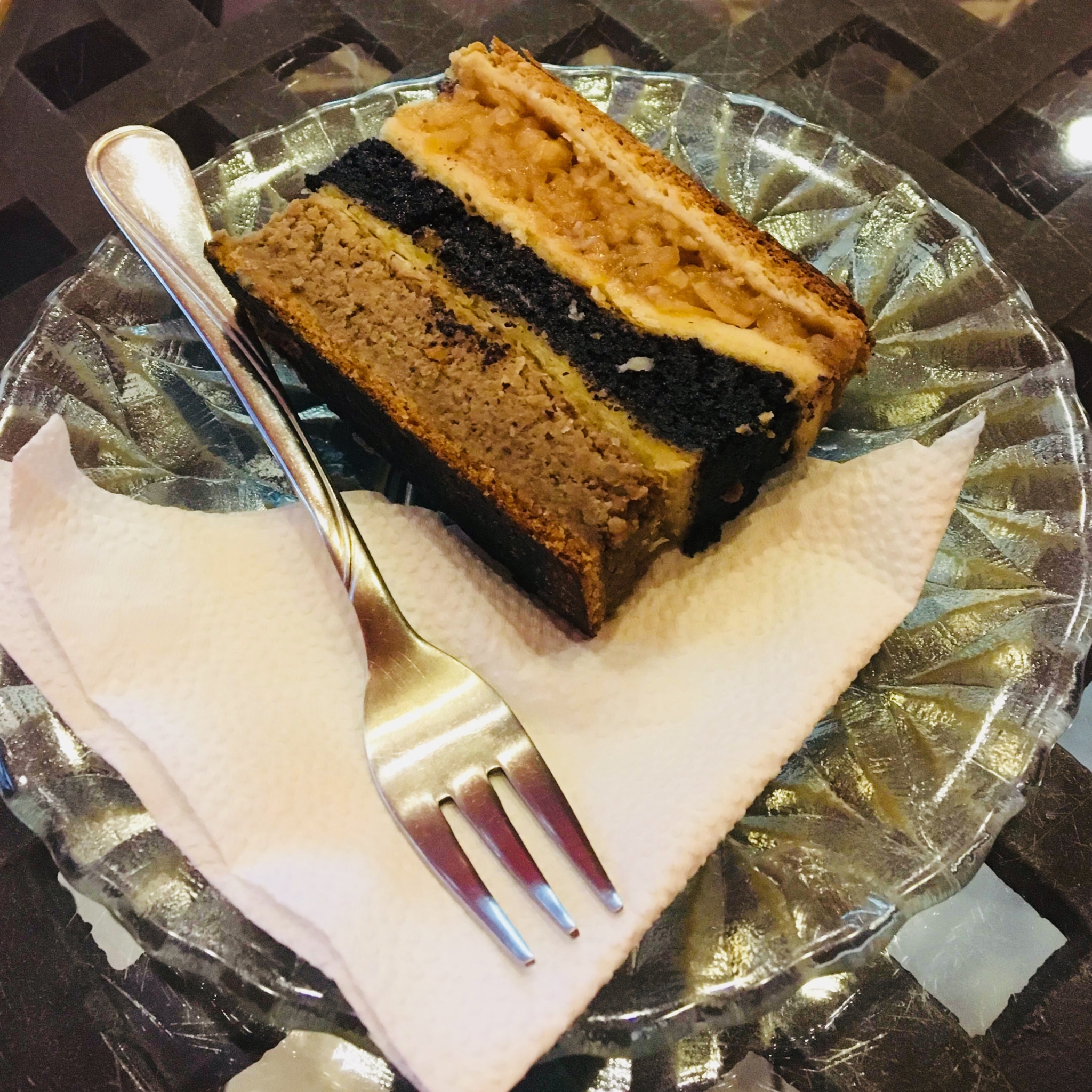
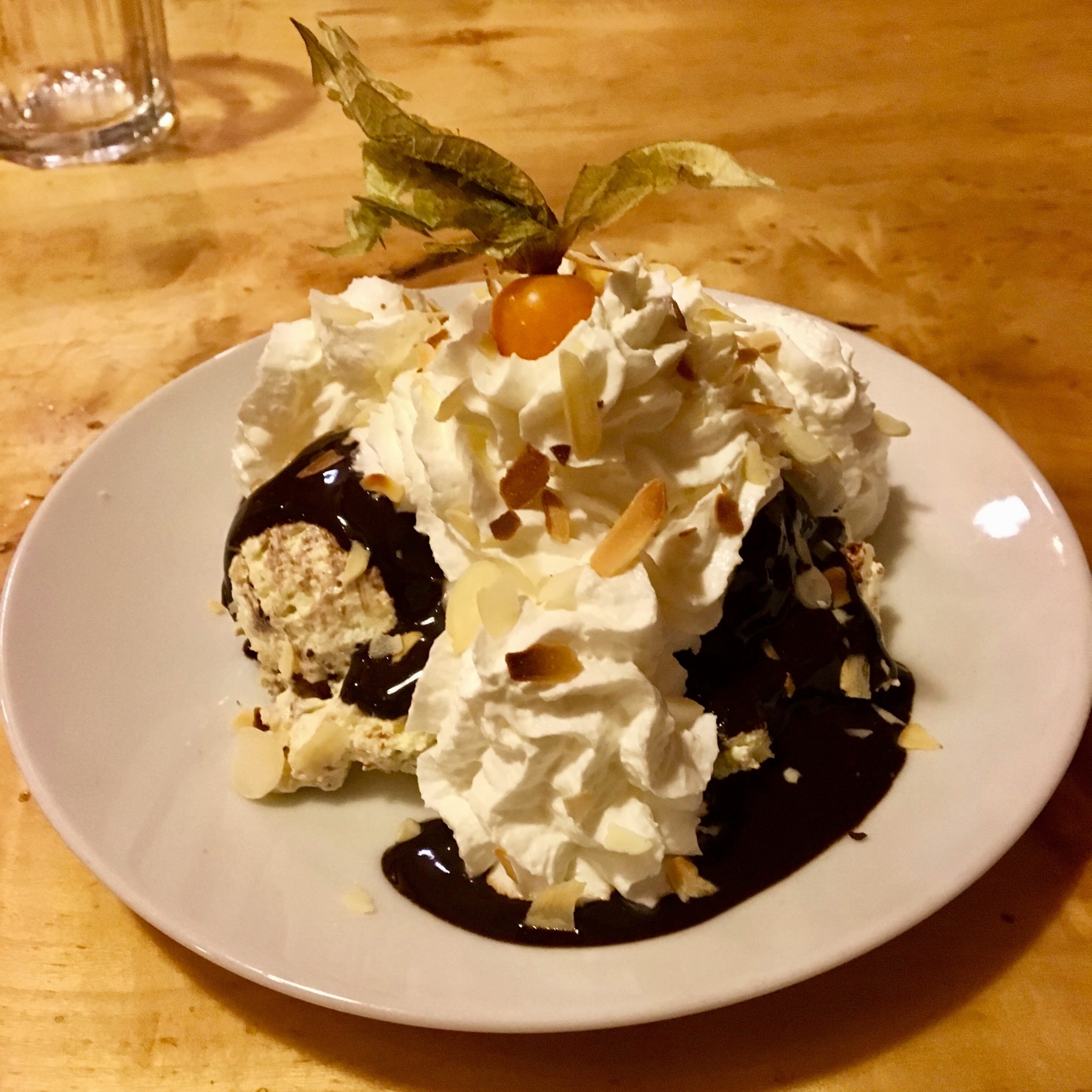
3. Sweets. Good God, Hungarians know how to do their sweets. My sweet tooth is having a field day. Pastries and cakes, in fact all manner of sweets, are ubiquitous here in what are known as cukrászdas, which are “sweet shops” that sell any kind of sweet a sugar maniac can think of in one convenient location. In one particularly famous Jewish cukrászda, I sampled flódni, a three layer pastry of crushed walnuts (mmm...), poppy seeds, and apples. At a Hungarian restaurant on the first week, my roommate and I had the good fortune of ordering Somlói Galuska, a beautiful sponge cake trifle drenched in chocolate sauce as dark as hell and a little boozy (so, in a word, divine). But the sweets don’t have to be fancy. In every subway stop I’ve been to I’ve seen pastry shops galore where everyone lines up to buy pastries filled with csoki (chocolate) or túró (like cream cheese).

Unfortunately, I have lost many a two hundred forint coin at such shops.

img_1717
Flódni from Fröhlich Kóser Cukrászda

img_1576
The beautiful Somlói Galuska from the first night. The little fruit on top, we discovered, is a delightfully sour “ground cherry”!
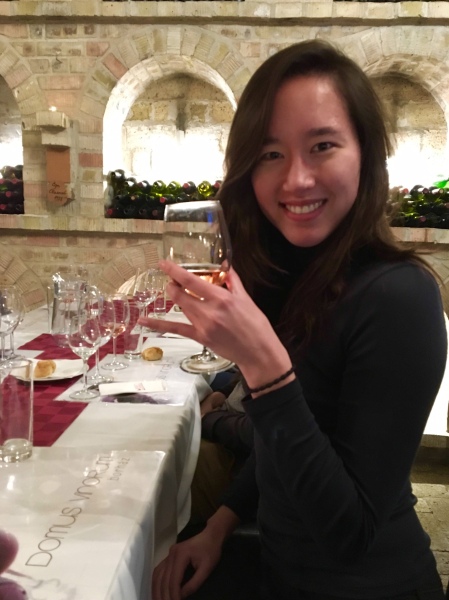
And finally, to talk about drinks. Hungary is wine country (not beer, like its western neighbors) and thank God for that- I’ve always disliked beer. I’ve had two official wine tastings so far, and have swirled and breathed in wine as pretentiously as I possibly can. But by far the best thing about Hungarian wine culture is that it’s extremely common to drink wine at bars (even not-fancy bars), which means I no longer have to look like a dweeb drinking a glass of wine while all the cool kids drink Coors Light or something.

Wine and desserts, friends. Pray I don’t come home with diabetes.

img_1589
Me at wine tasting numero uno trying to be fancy with a fancy rosé.

Tuesday, February 5, 2019

QUICK UPDATE: Budapest and Math

For the next four months (February to May), I’ll be studying abroad with the Budapest Semesters in Mathematics (aka BSM) in Hungary. The first three weeks have been devoted to studying basic Hungarian and learning about Hungarian culture with the Babilon Language School. There are a lot of firsts here: first time in Eastern Europe, first time studying pure math full time, first time eating goulash, etc. I expect this will be a fountain of inspiration for this blog (fingers crossed!), so to avoid having to re-explain the scenario I wanted to preface future posts with this update.

So, without further ado, sziasztok from Budapest!

Monday, January 28, 2019

Help Wanted: An Epistemological Concern

I need help. Problems in philosophy are as old as time, and what I'm doing I'm sure is just putting my own personal spin on a conundrum that many, many people have encountered. Nevertheless, I'd love some guidance about how to approach the issue.

I lived in Korea for seven years on Yongsan Garrison, an American military base in the middle of the capital city, Seoul. I graduated from both Seoul American Middle School and Seoul American High School, living, studying, and growing up between the sluggish base and the bright Korean metropolis.

Prior to moving to Seoul, we moved from place to place, spending no longer than 2-3 years in each location. Once we left, we never returned. All I have left of each location I grew up are the memories of those places (and of course, the corroborating accounts of the people in my family who moved with me).

Once I graduated high school, I left Seoul to go to college in New York. As of today, I have spent about three years away from the place where I spent my formative years. With one exception (a one-week reunion with my best friend from high school) I have not had any direct contact with anyone I knew in Korea who isn’t my direct family. The only remnants I’ve seen of my life in Korea are the occasional social media updates that old teachers and students post.

You might be getting some idea about where this story is going. It’s going to take a dramatic turn. The US Military has recently declared that Yongsan Garrison will close in 2019. The place where I did the most growing up is going to be wiped off the face of the map and replaced with a park. Politically speaking, this move was a long time coming. Americans really don’t need to be occupying the most valuable real estate in Korea with a bunch of ugly, outdated military buildings from the 50s.

This is pretty nostalgia-worthy on its own, but more importantly, it got me thinking about the criteria we use to verify our own memories. Let’s say that I have coffee with my friend Matt at Coffee Shop X at time T. A day later, I want to verify that the thing that I remember, this memory I have of drinking coffee with Matt, actually occurred. An obvious thing to do would be to find Matt and see if he has the same memory, and if it accords with mine, then conclude that this is enough evidence for my memory to have happened.

But if the issue at hand is that I want to have some criteria of verifying my own (human) memory, then it doesn’t really make any sense to use someone else’s own (human) memories as evidence for the veracity of mine. The thing that bothers me about this solution is that I’m looking for an independent criterion to verify my own memory, one that doesn’t depend on the memories of others.

So the next obvious thing for me to do is to return to Coffee Shop X. By doing this, I can examine the way the coffee shop looks and smells, its location, the hardness of the tables, even the taste of the coffee I ordered, and if this sensory evidence accords with my memory of coffee yesterday with Matt, then it seems that I have some way of independently establishing some kind of evidence for the veracity of my memories.

It seems to me that at least superficially, something important is to be gained by going back to the location that we remember memories taking place. Which is where my own conundrum comes in:

Going back to the location of my memories of my middle and high schools is unavailable to me. All physical evidence of the base will be gone (well, not entirely: as I understand a museum of the history of the base will be built in the park, but for the purposes of this discussion that doesn’t seem too relevant). If going back to the location of a memory is a good way to independently verify memories, then how can I verify the memories I have of living on base and going to school there for seven years?

To make this more concrete, I want to give a toy example. Let’s say in high school, I hid a pencil somewhere in my school (perhaps in a secret compartment in one of the walls) and didn’t tell anyone about it. Nobody but me knows, and there is not the slightest chance that anyone but me will find the pencil. Once the school is gone, the physical evidence of my hiding the pencil is also gone. The surest way for me to independently find evidence for the truth of my memory (i.e., finding the pencil) is also gone. Is the memory of my hiding the pencil any less legitimate than my memory of making my bed in the morning, which can be easily verified by walking into my room and seeing my bed made?

Whether going back to the location of a memory and examining the physical evidence to verify a memory is enough evidence to judge the veracity of a memory is a good question. In discussions with friends and professors, it seems like a common line of reasoning is that all human experiences that are not occurring at this very moment are memories. Since everything is in flux, and no memory’s setting is exactly the same when we revisit it, no memories can be trusted and so my dramatic case is no different from the ordinary case. Not being able to confirm our memories is just a fact we have to deal with.

But this objection doesn’t negate the central worry: it only provides a degree of graduation. Surely, when we recognize the setting of a memory, it means something. Even if we can’t accept the idea that we can completely verify a memory’s veracity, if the feeling of recognition exists, then being able to go back to the setting of a memory and gaining that bit of evidence provides more certainty than otherwise. So are my memories less legitimate than the memories of someone who can go back to their old school and find the pencil that they hid there?

So, to sum it up, here are the questions I have: what, if any, are good ways to independently verify that memories have occurred? If revisiting the setting of a memory is a good way to do this, then does it follow that my memories of high school are less legitimate than the average high school memory (because I have less of a setting to go back to than others)? Is there then a way for me to “reclaim” my memories? Is there something I’ve missed or haven’t considered thoroughly yet?

I’d love to hear your point of view or perhaps some written sources about this conundrum. It’s difficult to sift through the wealth of epistemological work without some guidance (and I’m sure this problem has been discussed at length many times). Thanks in advance!

Monday, January 21, 2019

The Right Way to Eat Korean Barbecue

Or: Life Lessons from a Bunch of Tasty Meat


Korean barbecue is a phenomenon that has thankfully become a phenomenon in the States, which is fortunate because I was not about to give up my grilled meat when I came back the States. During the seven years I lived in Seoul, Korean barbecue happened at least once every two months or so (whenever my Korean grandfather came to visit, for instance, which was often).

Oh, the gluttonous joy that came from these meals. Koreans are experts at stuffing themselves, and a typical KBBQ experience entailed stuffing myself with enough meat, rice, and side dishes to explode… and then finishing the evening with one or two more gut-busting noodle and soup courses before sprawling on the floor and stacking the mats as pillows to snooze off the calories (the only reason this was okay was because I was pretty young- not recommended for general audiences). We did this often, and we went hard. It’s a total Korean experience, the full package.

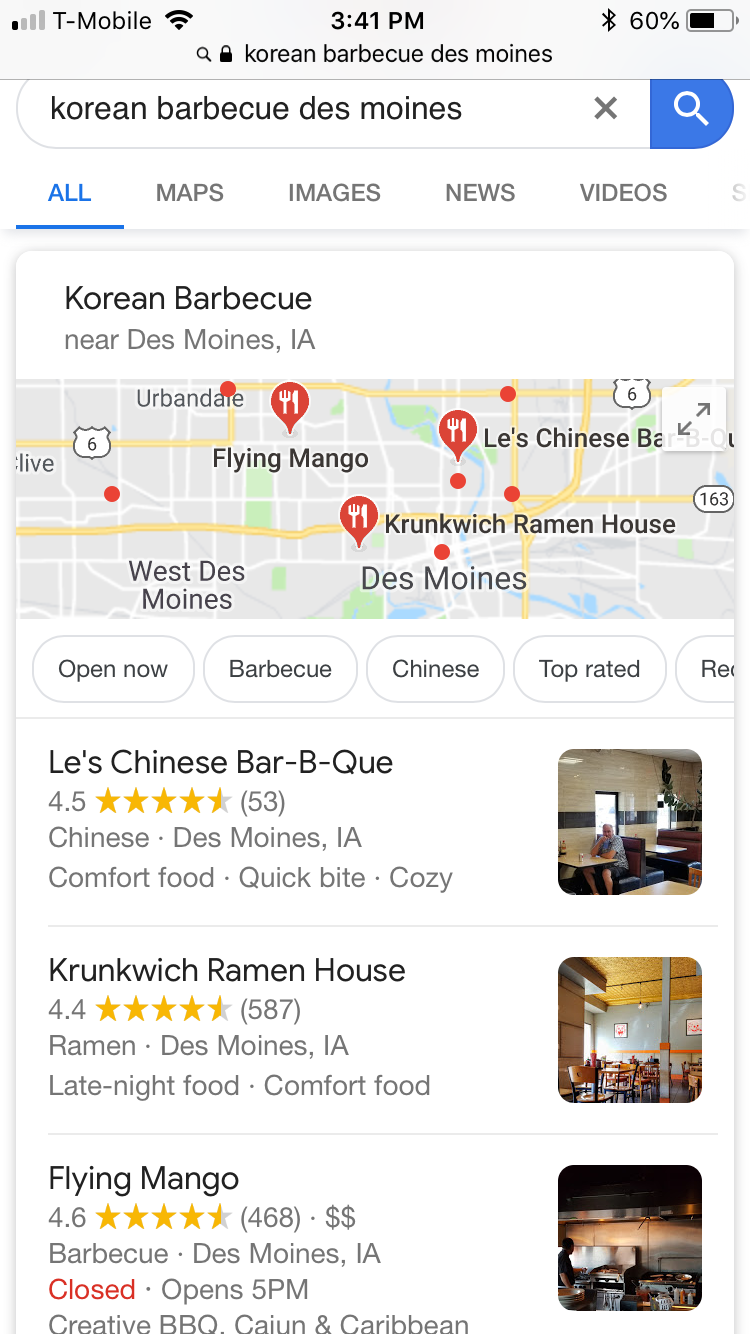
Anyway, I was talking to a poor soul from rural Iowa and who insisted that there is no such thing as Korean barbecue there. Skeptic that I am, I googled Korean barbecue places in Des Moines, and unfortunately, this is what came up:

I kind of wanted to laugh when I saw that the top result was “Le’s Chinese Bar-B-Que” but instead I kind of died a little on the inside instead. Iowans, this is a significant market opportunity! Bring KBBQ to Iowa!
kbbq

So this conversation led me to believe that there exists a non-trivial cohort of Americans who have never had the true KBBQ experience. There are a number of “guides” for eating Korean barbecue online, but for the most part these are just descriptions of what’s going to come out, with very few if any practical guides for how to enjoy the food the most. Far and away the best thing I found at KimchiTiger (which by the way is an awesome blog with content I can really get behind) here: https://kimchitiger.com/blogs/all/18063299-how-to-eat-korean-bbq-like-a-korean.

The article is great, but there are a few finer points I think it misses. First of all, most KBBQ tips advise getting samgyupsal (pork belly) or kalbi (marinated short rib), both of which are delicious and worth trying. But it’s also worth noting that samgyupsal tends to be one of the cheapest options, while kalbi is going to be one of the more expensive things on the menu.

Also, nobody seems to talk enough about dyejigalbi (marinated pork ribs) enough! When we lived in Korea, it was the only thing we ordered when we went out for barbecue. It’s all the tender deliciousness of marinated meat that you get with beef, minus some of the expense. Also sometimes I’m just not feeling the greasy pork belly feeling.

The other thing I love about the KimchiTiger article is it actually shows you how to use ssam to make your little lettuce package of joy, which is something so Korean that all your Korean friends will be shocked if you do it out of the box (assuming you’re not Korean, of course).

But the personal beef (heh) that I’m going to bring up is that the major mistake people make when they eat Korean barbecue is to assume there’s a right way to eat Korean barbecue. Aha, the clever ruse of the title has been exposed!

I don’t know, maybe when you’re eating a filet mignon it’s not really proper to chop it into little pieces and mix it with the salad or something. But the best way to approach Korean barbecue—and Korean food in general—is to take advantage of the extraordinary wealth of options that come in the form of all these delicious side dishes and accompaniments and really experiment to find something delicious.

Try eating a piece of meat with just the marinated onions. Then try doing that plus a piece of kimchi, or maybe a spoonful of buckwheat noodles (nengmyun). Or maybe you’ll dip it in ssam-jang and sample with a sesame leaf, or eat it with a piece of tofu, or maybe you’ll put five different side dishes and three pieces of meat on a lettuce leaf (which you must eat whole—no bites).

My point is, there are really no wrong answers. Probably the worst thing you could do while eating Korean barbecue is to assume there is a right answer and deprive yourself of the opportunity of mixing and matching so many different flavors and textures. (who knew such a delicious medium could be a metaphor for life?)

And if at the end of the day the mixing and matching doesn’t do it for you, then by all means feel free to revert back to dipping the meat in salt/oil and eating it with rice (just know that people like me who live for flavor combinations will definitely judge you for this).

Just don’t do anything too weird, like eating your chopsticks, and if you find a flavor combination that is delicious then I’m sure your table companions will applaud you.
Sunday, December 16, 2018

The Number Three: A Metaphysical Mystery

When George Simpson opened his eyes from unsettling dreams, he found himself changed into the number three.

In fact, not all instances of the number three, but this one in particular: 3.

There he is.

George is static, stuck between a colon and a period. His three-ness does not particularly bother him—in fact, it is perhaps immensely more relaxing than being a human. All of his worries as a human seem far distant.

But he’s not unaware of the immense responsibilities that come with representing the number three. George doesn’t know if he’s imagining it, but he feels a profound connection with all instances of the number three, from the few times it’s been mentioned in this very manuscript to the instance where, just now, I said the number “three.” He represents a long and storied legacy that began almost as soon as humans developed the capacity to hold up fingers and think.

He wonders whether his family will be concerned now that he is a number. Or for that matter, how will they know that he is a number? Even if they somehow find out that he has become the number three in this manuscript, how will they know which number three he is?

Of course, we know which one he is. He is the number three expressed only a few paragraphs ago.

George has decided that though it is concerning that his family and friends will have no idea that he has become the number three, he has deeper issues to contend with: the entire situation reminds him of a scenario from his favorite book, in which the protagonist turns into a cockroach. George has wondered all his life whether such a thing would be possible, and now that he is the number three he supposes that it must, indeed, be so.

George laughs to think that anyone could doubt that becoming a cockroach is possible when he himself has been transformed into a number.

He is not so concerned with the how or why, but more deeply troubled by the what.

What is he, now that he is the number three? He can feel his three-ness, but being three is not the same as being a human. He used to feel and stretch his limbs, he would drink water when he was thirsty and sleep long into the mornings. He wouldn’t say there is anything physical to his being now. He can no longer feel his own “body.” Threes don’t have eyes to see, or skin to touch. But yet he exists!

And yet another issue: by what mechanism does he think? Surely threes have no brains, so where is the container of the mind? George is not sure what to make of the fact that at this very moment he is contemplating his existence, and yet has no way of verifying any mechanism for that existence. He finds the situation vaguely spooky, if not outright alarming.

George has thought about these issues for a while but has decided that it is probably not so concerning after all. Now that he is the number three, it is not really within his nature to wonder about such fundamental problems. George is content to just continue being the number three.

But wait— George remembers something similar happening to the protagonist in the cockroach story. After being a cockroach for a while, the protagonist embraced his cockroach-ness and slowly forgot who he was, losing his very humanity. George can’t be sure quite yet, but he doesn’t think he’ll forget his humanity—there’s no reason to, now that the unreliable firings of his bygone neurons have no chance to misfire or wither away or misalign. If George loses his humanity, he decides, then it is by his own design.

The real question here, George thinks, is whether or not he can trust his memories. He remembers being human, but now he is the number three. Where can he go, what can he do to verify those memories? There’s no way for him to return to the places he’s been and compare the images in his head with the real world, so how can he know that being human wasn’t some elaborate dream that he, a lowly three, just made up? Try as he might, George can’t imagine any good criteria to judge the truthfulness or trustworthiness of his memories—he only knows that the memories exist, and don’t change (again—no brain to change the memories, so they remain immutable).

Oh dear! Poor George, thinking so hard about his three-ness, has rendered his very existence into a hazy misremembered kind of dream, and can’t even clearly articulate where he ends and the other mundane, lifeless letters and numbers and punctuation marks begin. George almost regrets the amount of thought he’s put into these matters, but then stops to laugh at his own worries—if his own existence and identity bother him so much, then evidently, his humanity isn’t so gone after all!