Showing posts with label Food. Show all posts

Saturday, February 9, 2019

Hungarian Food: Impressions

My first reaction to Hungarian food was that it’s not very photogenic. In the first week, the Babilon Language School took us to a small restaurant in Taksony for a sampling of the Hungarian culinary tradition, and after I had loaded my plate with all manner of roasted pork, stuffed cabbage, and other stewed meats and grains, I thought to myself “the only two colors on my plate are white and red.” So besides the fact that I was ravenous and couldn’t wait to dig in, that’s the unfortunate reason I didn’t take a photo of the food.

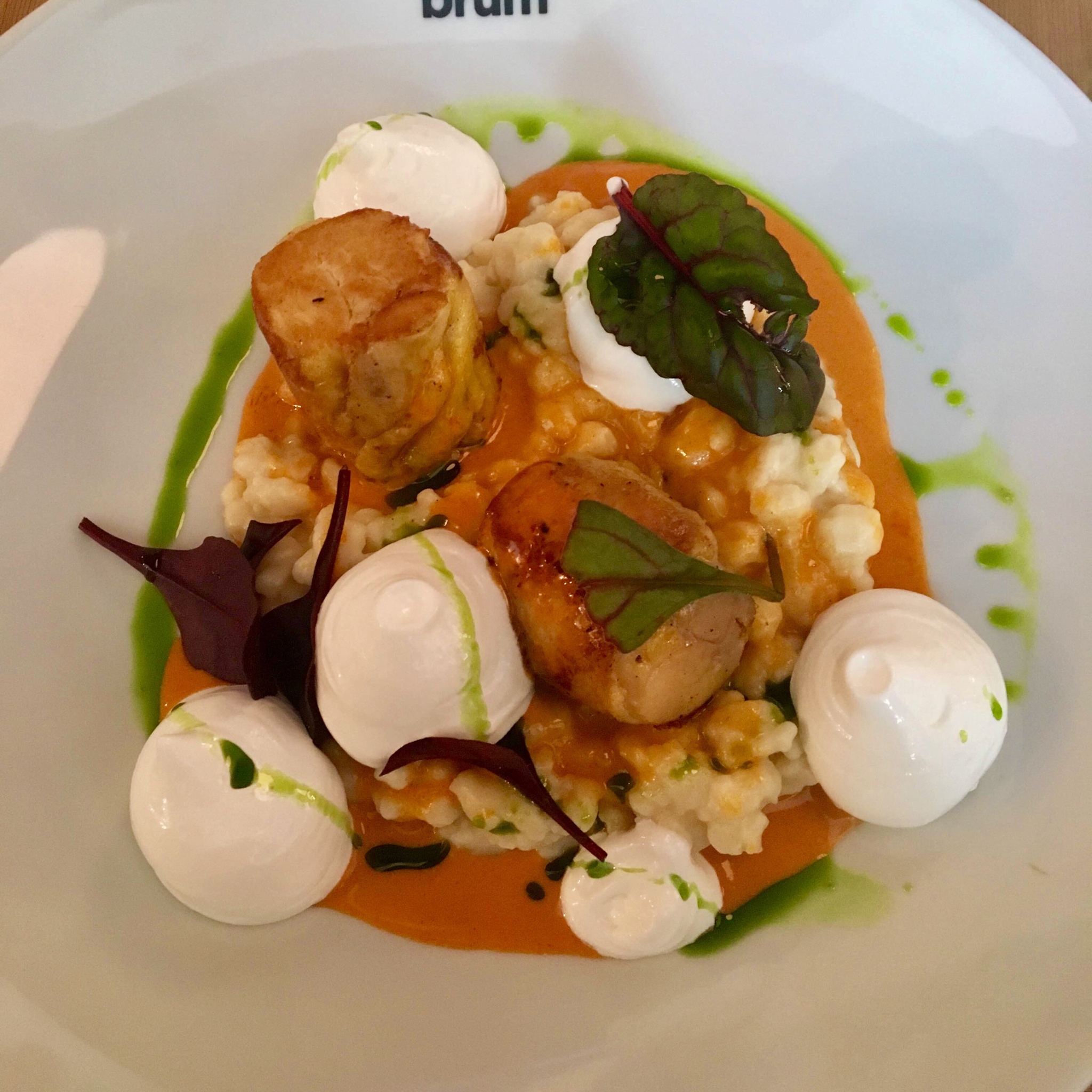
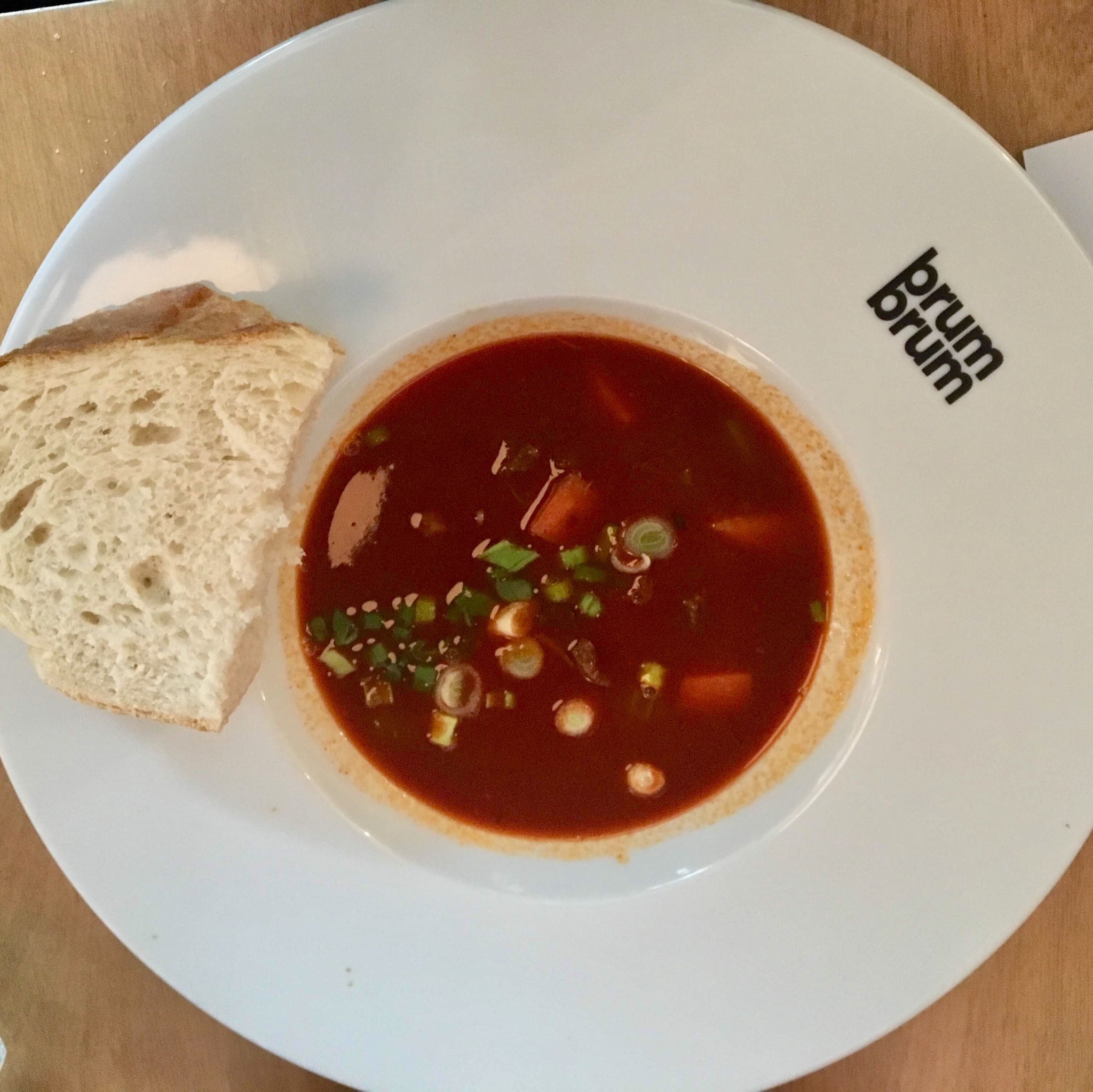
Luckily, when we went to Eger (more on that later) our bubbly guide Emese took us to a glorious contemporary restaurant that served Hungarian food but very prettily. So without further ado, a glimpse of the Hungarian palate:
img_1737-1
The first course: the famous Hungarian goulash. This version featured a rich beef base thick enough to coat the back of a spoon (and blood red to boot) but I’ve also had less fancy more soup-like variants of this delicious, paprika flavored dish.

img_1738-1
The main course was a lovely chicken paprika dish with an egg noodle base, a modern take on chicken paprikash. Note the heavy use of tejfol here!

img_1739-1
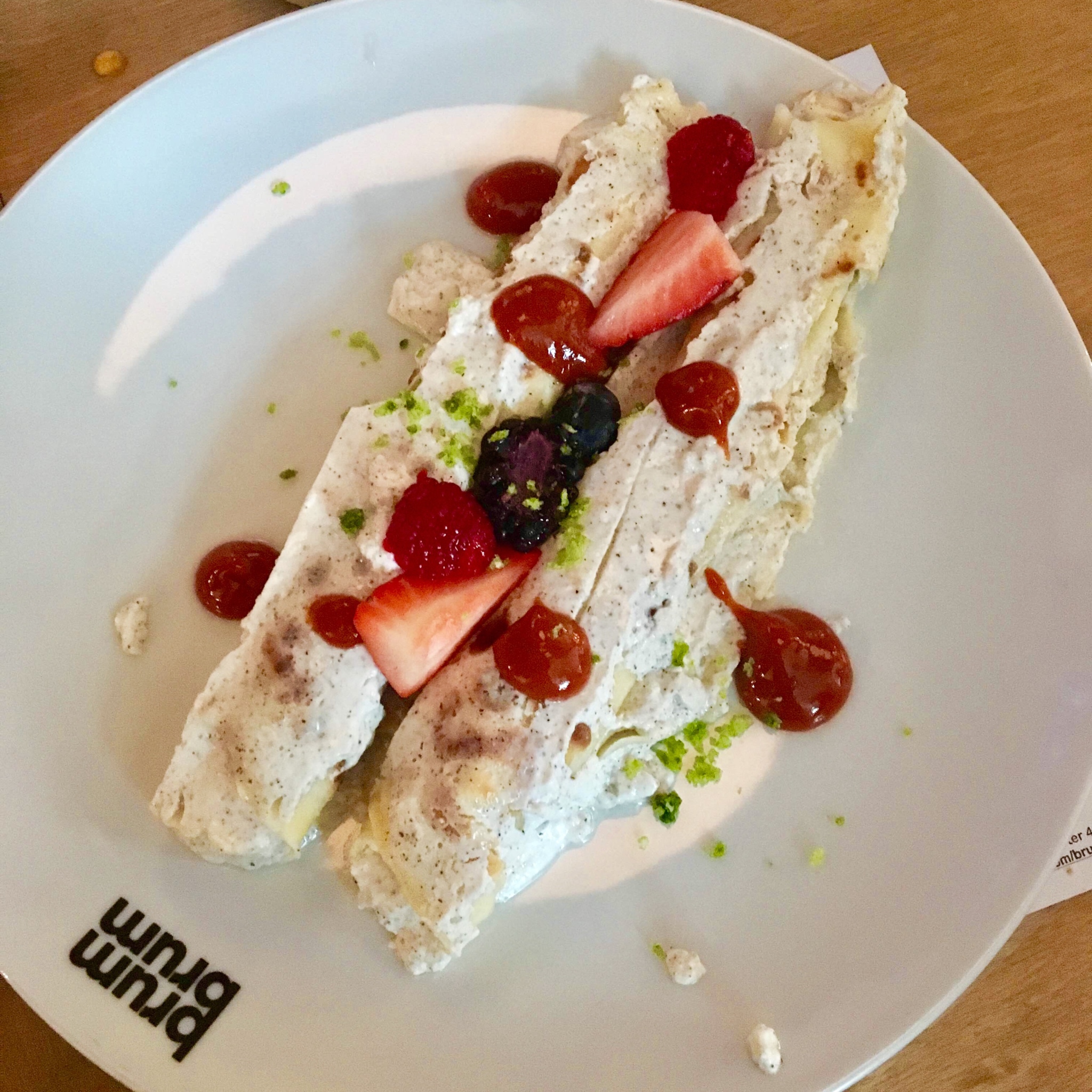
Dessert was Hungarian pancakes. When I first heard “Hungarian pancakes,” I was expecting latke-like things, but these are sweet crepes stuffed with túró and topped with apricot jam and berries.
The stars here are meat and dairy. Hungarian food is very heavy and not very vegan friendly (at all). But with all the fat and spices, it’s honestly objectively delicious, even if it’s not the best diet for avoiding heart attacks.

I have three major observations about the food:

1. One of my new favorite ingredients is the Hungarian tejfol (pronounced “tay-fol”) which is an interesting mix of sour cream and yoghurt that’s perfect for cutting through all the fatty spicy meat and sausage, or for dolloping on a bowl of thick goulash. In the previous picture, there are about 2 pints’ worth of tejfol dolloped on the main chicken dish. Two of my friends on the program like to joke about how they killed a liter of sour cream here within a week thinking it was Greek yoghurt (mixing with peanut butter and such) before they realized otherwise, but honestly, I think it's an understandable mistake. Tejfol tastes more like yoghurt to me than American sour cream. I’ve put a little in oatmeal to make it creamy and it’s pretty good.

2. If the “white” in Hungarian food is all that tejfol and carbs and such, the red is definitely paprika (Hungarian for the Cubanelle-like peppers that are cheap and ubiquitous here). Paprika, paprika powder, paprika paste (which comes in toothpaste-like tubes), and all derivations of the spice are in everything here. Which means, at least according to me, that Hungarian food has all the heaviness of British food with none of the blandness!

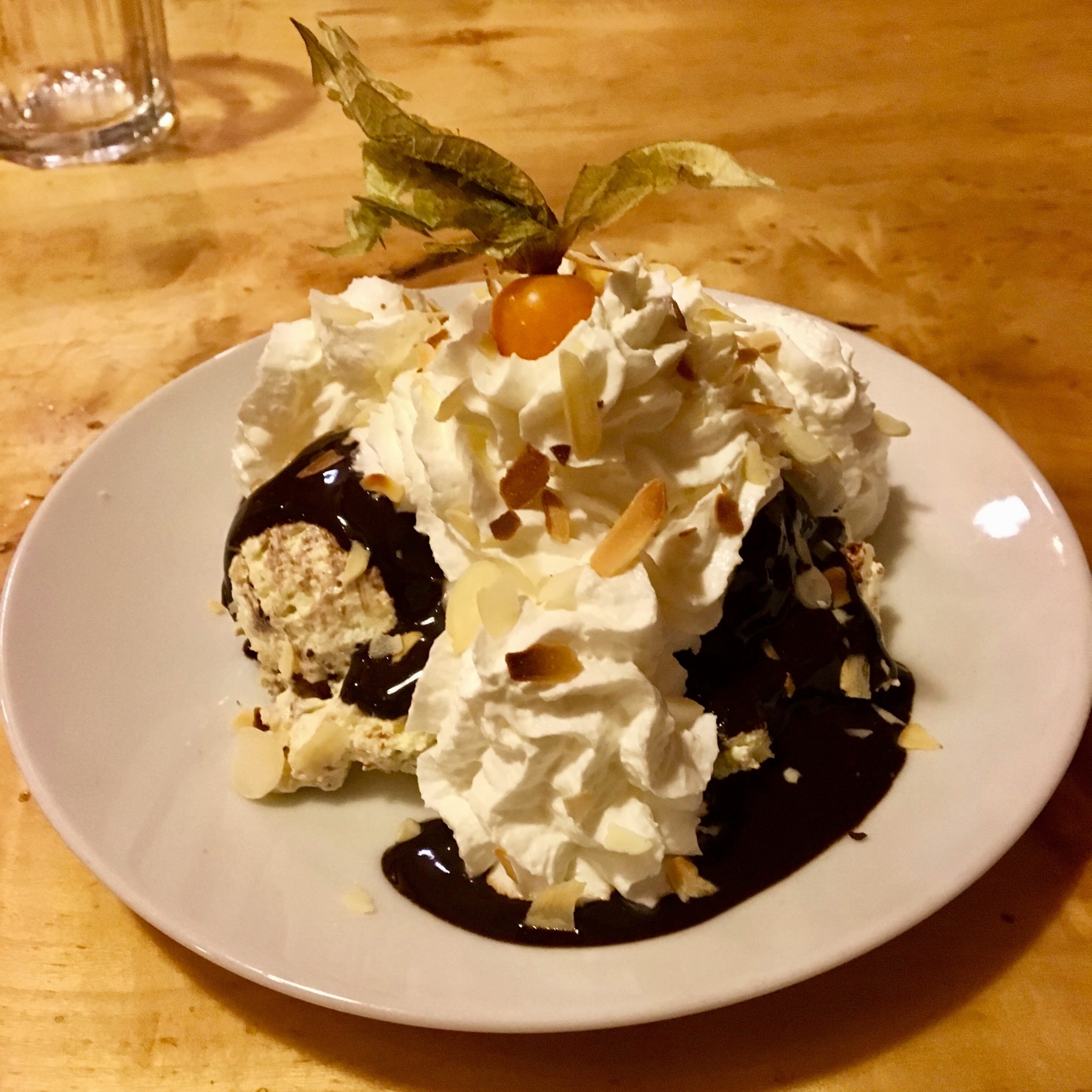
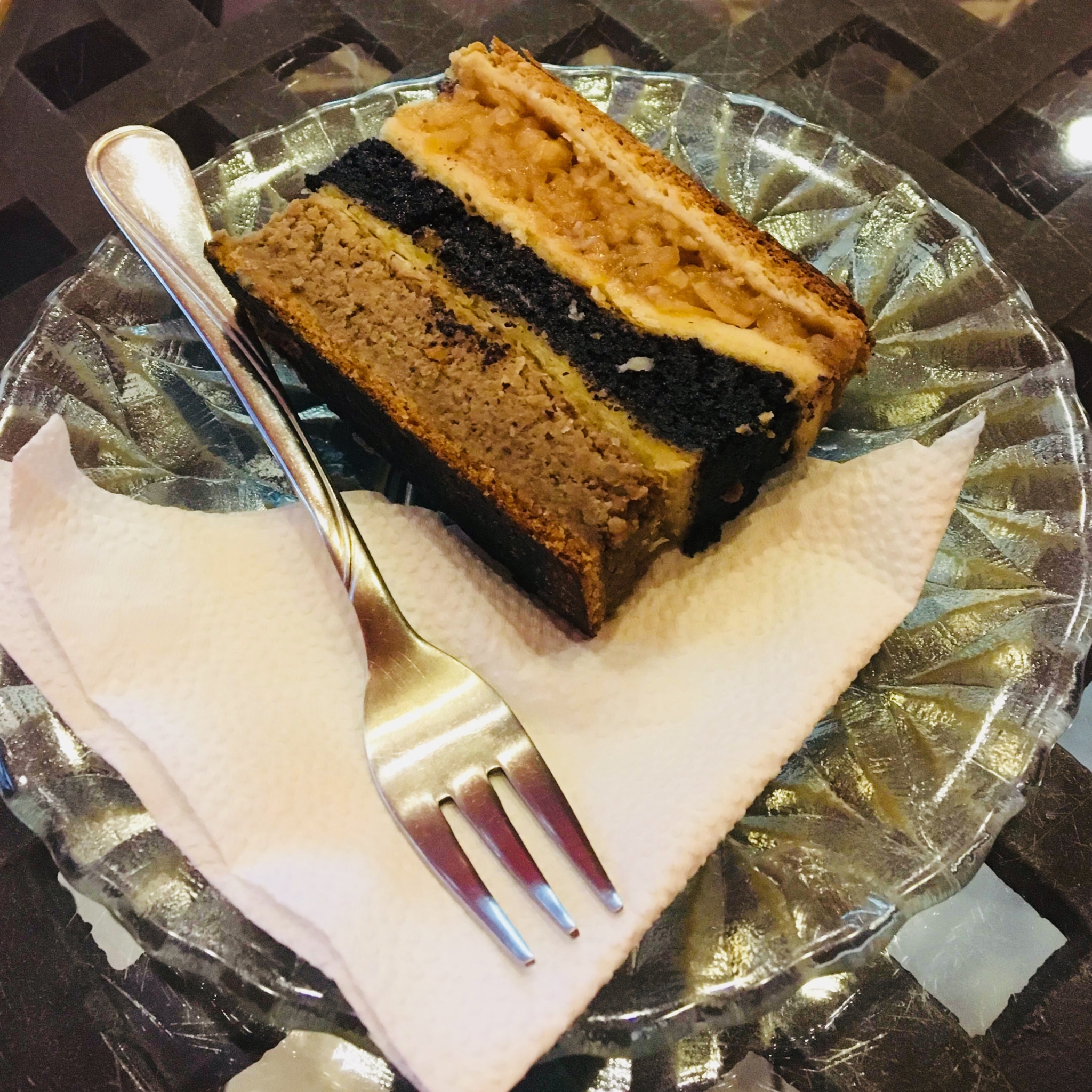
3. Sweets. Good God, Hungarians know how to do their sweets. My sweet tooth is having a field day. Pastries and cakes, in fact all manner of sweets, are ubiquitous here in what are known as cukrászdas, which are “sweet shops” that sell any kind of sweet a sugar maniac can think of in one convenient location. In one particularly famous Jewish cukrászda, I sampled flódni, a three layer pastry of crushed walnuts (mmm...), poppy seeds, and apples. At a Hungarian restaurant on the first week, my roommate and I had the good fortune of ordering Somlói Galuska, a beautiful sponge cake trifle drenched in chocolate sauce as dark as hell and a little boozy (so, in a word, divine). But the sweets don’t have to be fancy. In every subway stop I’ve been to I’ve seen pastry shops galore where everyone lines up to buy pastries filled with csoki (chocolate) or túró (like cream cheese).

Unfortunately, I have lost many a two hundred forint coin at such shops.
img_1717
Flódni from Fröhlich Kóser Cukrászda

img_1576
The beautiful Somlói Galuska from the first night. The little fruit on top, we discovered, is a delightfully sour “ground cherry”!
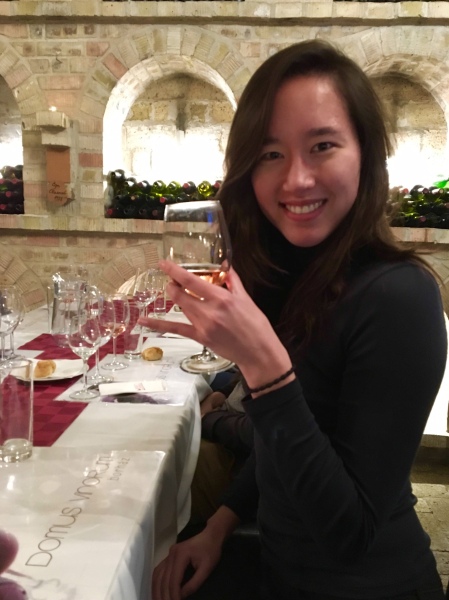
And finally, to talk about drinks. Hungary is wine country (not beer, like its western neighbors) and thank God for that- I’ve always disliked beer. I’ve had two official wine tastings so far, and have swirled and breathed in wine as pretentiously as I possibly can. But by far the best thing about Hungarian wine culture is that it’s extremely common to drink wine at bars (even not-fancy bars), which means I no longer have to look like a dweeb drinking a glass of wine while all the cool kids drink Coors Light or something.

Wine and desserts, friends. Pray I don’t come home with diabetes.
img_1589
Me at wine tasting numero uno trying to be fancy with a fancy rosé.

Monday, January 21, 2019

The Right Way to Eat Korean Barbecue

Or: Life Lessons from a Bunch of Tasty Meat


Korean barbecue is a phenomenon that has thankfully become a phenomenon in the States, which is fortunate because I was not about to give up my grilled meat when I came back the States. During the seven years I lived in Seoul, Korean barbecue happened at least once every two months or so (whenever my Korean grandfather came to visit, for instance, which was often).

Oh, the gluttonous joy that came from these meals. Koreans are experts at stuffing themselves, and a typical KBBQ experience entailed stuffing myself with enough meat, rice, and side dishes to explode… and then finishing the evening with one or two more gut-busting noodle and soup courses before sprawling on the floor and stacking the mats as pillows to snooze off the calories (the only reason this was okay was because I was pretty young- not recommended for general audiences). We did this often, and we went hard. It’s a total Korean experience, the full package.

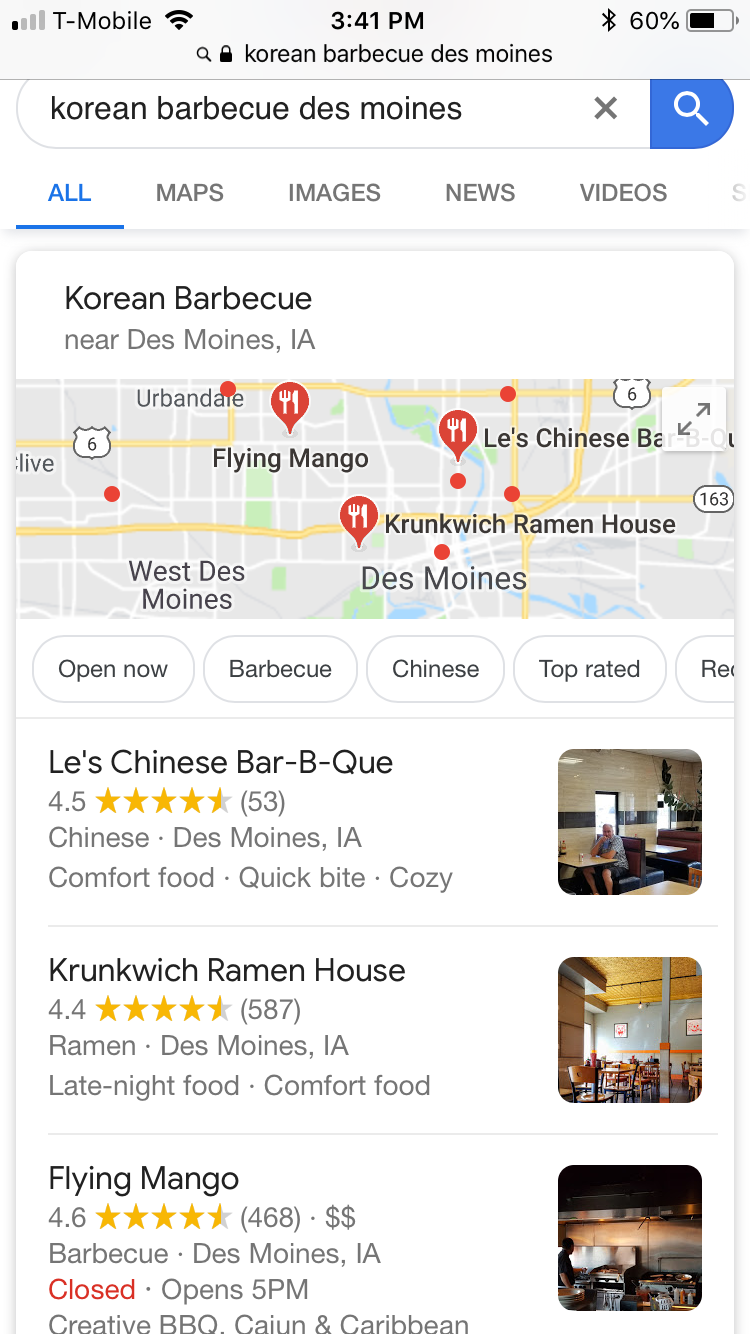
Anyway, I was talking to a poor soul from rural Iowa and who insisted that there is no such thing as Korean barbecue there. Skeptic that I am, I googled Korean barbecue places in Des Moines, and unfortunately, this is what came up:

I kind of wanted to laugh when I saw that the top result was “Le’s Chinese Bar-B-Que” but instead I kind of died a little on the inside instead. Iowans, this is a significant market opportunity! Bring KBBQ to Iowa!

kbbq

So this conversation led me to believe that there exists a non-trivial cohort of Americans who have never had the true KBBQ experience. There are a number of “guides” for eating Korean barbecue online, but for the most part these are just descriptions of what’s going to come out, with very few if any practical guides for how to enjoy the food the most. Far and away the best thing I found at KimchiTiger (which by the way is an awesome blog with content I can really get behind) here: https://kimchitiger.com/blogs/all/18063299-how-to-eat-korean-bbq-like-a-korean.

The article is great, but there are a few finer points I think it misses. First of all, most KBBQ tips advise getting samgyupsal (pork belly) or kalbi (marinated short rib), both of which are delicious and worth trying. But it’s also worth noting that samgyupsal tends to be one of the cheapest options, while kalbi is going to be one of the more expensive things on the menu.

Also, nobody seems to talk enough about dyejigalbi (marinated pork ribs) enough! When we lived in Korea, it was the only thing we ordered when we went out for barbecue. It’s all the tender deliciousness of marinated meat that you get with beef, minus some of the expense. Also sometimes I’m just not feeling the greasy pork belly feeling.

The other thing I love about the KimchiTiger article is it actually shows you how to use ssam to make your little lettuce package of joy, which is something so Korean that all your Korean friends will be shocked if you do it out of the box (assuming you’re not Korean, of course).

But the personal beef (heh) that I’m going to bring up is that the major mistake people make when they eat Korean barbecue is to assume there’s a right way to eat Korean barbecue. Aha, the clever ruse of the title has been exposed!

I don’t know, maybe when you’re eating a filet mignon it’s not really proper to chop it into little pieces and mix it with the salad or something. But the best way to approach Korean barbecue—and Korean food in general—is to take advantage of the extraordinary wealth of options that come in the form of all these delicious side dishes and accompaniments and really experiment to find something delicious.

Try eating a piece of meat with just the marinated onions. Then try doing that plus a piece of kimchi, or maybe a spoonful of buckwheat noodles (nengmyun). Or maybe you’ll dip it in ssam-jang and sample with a sesame leaf, or eat it with a piece of tofu, or maybe you’ll put five different side dishes and three pieces of meat on a lettuce leaf (which you must eat whole—no bites).

My point is, there are really no wrong answers. Probably the worst thing you could do while eating Korean barbecue is to assume there is a right answer and deprive yourself of the opportunity of mixing and matching so many different flavors and textures. (who knew such a delicious medium could be a metaphor for life?)

And if at the end of the day the mixing and matching doesn’t do it for you, then by all means feel free to revert back to dipping the meat in salt/oil and eating it with rice (just know that people like me who live for flavor combinations will definitely judge you for this).

Just don’t do anything too weird, like eating your chopsticks, and if you find a flavor combination that is delicious then I’m sure your table companions will applaud you.