Thursday, June 25, 2020

Why I'm done with Murakami

I recently finished reading Kafka on the Shore and was deeply disappointed by it. I wrote a review on Goodreads which ended up being long enough and comprehensive enough that I thought I would post it here, too -- the reason I don't plan on reading any more books by Haruki Murakami. So, here we go: 

This is not my first Murakami rodeo. I've read 1Q84, Wind-Up Bird, and several short story anthologies before Kafka on the Shore. And from my first few encounters, I too was blown away by the worlds the he creates, the stories unlike any that I’d read before - captivating, metaphorical, surreal, the whole gamut. But Kafka on the Shore is the Murakami that finally triggered my utter disillusionment with Murakami. The straw that broke the camel's (cat's?) proverbial back. 

Of course, the book has many good points - like its companions, it's famous because of its compelling magical realism, flowing descriptions/details, delicate narrative, etc., etc. His vivid writing is what propelled me to finish all five-hundred or so pages, and not regret doing so. I won't spend any time discussing this because other readers have done so at great lengths. 

The reason for my disillusionment: I am sick and tired of the strange, sexual trends that crop up in Murakami books that lead me to believe that we are actually reading - not some deep metaphor - but sick fantasies of his that he dresses up in literary tulle to justify, well, their sickness. Let me explain the trend I see: 

In every work of Murakami's that I have read, we have our Typical Murakami Lead: a precocious "gentle giant"-type young man who, according to the narrator, lacks any sort of agency and just sort of “floats along” in life. Here, it is Kafka Tamura, a jacked 15 year old boy who runs away from home.

In addition to the Murakami Lead, we have the supporting cast of Murakami Women who are all beautiful, slim, small, eat very little if at all, and seem to know more about things than the Lead. There are two main women who play this role in this book: Sakura and Miss Saeki.

And in every work that I have read, there is inevitably at least one scene where one of the Murakami Women engage in strange sexual activity with the Lead for reasons he can’t understand. Now, here’s the subtle point: because Murakami writes these leads in the position of “I don’t know what’s going on” and “I can’t control my body or this situation” in a fantastical setting where even we don’t understand all the rules, and because these Murakami Women seem to know more about the strange situation than the Leads, any sexual gratification that happens for the Leads is written up as something that’s out of their control, no matter how problematic the actual acts are. 

I can swallow this (and I have! In other works) if it happens infrequently, and the sexual activity actually means something in the broader scheme of the narrative. But with Murakami, these scenes are such a staple in his work that, when I found them again in this book, I finally listened to that uncomfortable angry feeling inside. 

And it’s particularly bad in Kafka on the Shore, partly because Miss Saeki (a fifty year old woman) and Sakura are heavily hinted to be Kafka’s mother and sister, respectively. In one memorable scene, Miss Saeki sleepwalks to Kafka’s room and initiates sex with him. “I figure I’d better wake her up. She’s making a big mistake, and I have to let her know… But everything’s happening so fast, and I don’t have the strength to resist,” Kafka thinks, as this little sleepwalking lady essentially “forces” him to have sex. “There’s nothing you can do to stop it,” we read when he penetrates her. 

Sure, you can chalk this up to narrative demand and say something like, “but Kafka actually didn’t have the strength to resist, it’s magical realism!” But narrative demand or not, this is rape, and it’s rape that has been written to absolve the male characters of any culpability. 

Something similar happens between Kafka and Sakura. While she is sleeping he undresses her and penetrates her, and thinks to himself, “No, actually I haven’t made up my mind about anything. Making up your mind means you have a choice, and I don’t.” Meanwhile, Sakura verbally tells him not to do it. “Stop already. Get out of me.” She says. Yes, this is a dream and technically not “real,” but in a book where “reality” doesn’t really mean anything, it’s a significant action that Murakami chose to write into the book. And he chose to write a scene where the Lead, again, absolves himself from any culpability because of the situation he’s in (it’s just a dream!) and proceeds with violating a woman who cries, and herself calls it rape. 

Why were these sex/rape scenes necessary? The book tells us to fit into some Oedipal trope, a “prophesy” that Kafka receives but is never fully fleshed out. An explanation that is not only unsatisfying, but also downright inexplicable. Oedipus continuously fought against his prophesy. He struggled his entire life against it, and at the end fulfilled it because of that very struggle. That’s why he’s sympathetic. Kafka on the other hand, I don’t sympathize with. Where is the struggle? Where is the grappling with the truth of his actions? There are no repercussions, no reckoning. 

It’s fine to write about rape, or sexual deviance. But Murakami protects his characters (who are aware of their actions) from facing any sort of moral quandary using the very medium of magic realism itself. And this happens so consistently, across multiple books, that I’ve reached my breaking point. I’m done with it.

Just to give a third example, there’s the scene between Hoshino (not Kafka, but the example is illustrative nevertheless) and an unnamed female college philosophy major. Hoshino is told that he must have sex with the philosophy major in order to get the information he needs. So he shrugs his shoulders and proceeds to have mind-blowingly good sex with a crazy hot philosophy major, all while ignoring her philosophical commentary. And we have no idea at the end of this why it was necessary. It just was. Again, same tropes: a Murakami Man, written to have no agency or culpability, having strange sex with a Murakami Woman for no good reason. 

It gets to the point where I wonder whether these situations were written as an outlet for some kind of rape/sexual fantasy - because this theme of a man saying, “oh no, but I have no control, you have all the control,” happens so frequently across all of his works. 

All I want are female characters in Murakami’s books to have real agency and emotions, not to be instruments in fulfilling male sexual fantasies. Aomame in 1Q84 is probably the closest example of a satisfying Murakami Woman that I can think of, and even she was implicated in all sorts of weirdness. And in Kafka on the Shore, God forbid, that strange scene with the caricatured “feminists” entering the library, well, doesn’t cut it. 

There’s a lot to love in Murakami’s work, but at this point, all of it is overshadowed by my constant fear that I will stumble across a strange sexual encounter that will leave me uncomfortable and angry. This book marks the peak of my disillusionment, and it will take a lot to get me to read another Murakami.

Sunday, May 24, 2020

I changed my mind about rain

I used to hate rain. Until recently, I've worn glasses all my life, and to me rain was the inconvenience of not being able to see on top of gloominess and the relentless feeling of pent-up melancholy. At least on a cloudy day I could still go outside without drops splattering my vision. I had conditioned myself, through years of feeling bad on rainy days, to feel a knee-jerk depression reaction when I woke up and heard drops on my window. Rain meant cancelled picnics, ruined beach days. It meant the impossibility of bright shining skin-warming runs.

I suspect I'm not the only one who has felt this way. That's why people move to California, or so I hear. And when I Zoom my friend in LA and his outline is crisp against the cerulean sky that is his background, yup, I understand even more.

I will caveat this poor opinion of rain by saying that when one is prepared for the rain-- i.e., without important papers or electronics, or perhaps with clothes that can whether the weather-- sudden heavy rain can be enjoyable in the cathartic sense that you just don't care anymore because everything is just so damn wet anyway. I've been caught in the rain enough times in office clothes in NYC-- somehow it never makes the forecast-- to appreciate the "singing in the rain" aesthetic. But sudden throw-your-cares away rain aside, I'm focusing now on the drizzly dampening creeping kind of rain that covers the sky all day like a weighted blanket.

My opinion of the rain began to change, maybe oddly, when my opinion of sunny days began to change. Spring in Virginia is at its best a mild breath before humidity's exhalation over the state, and on the sunniest, brightest, bluest days of the season I began to feel stressed and wary. For two months I had scrupulously avoided human contact, crossing streets preemptively to maintain six feet, six feet at all times, hissing at passing runners and bikers for no other reason than they were on the street to begin with and ruining my outside time, how dare they.

There is a wooded trail behind my parents' house that I began to avoid because it is narrow and on nice days there were so many people walking the trail that even if I hugged the other edge of it, perilously close to what I thought might be poison ivy, I still felt like I was inhaling virus. On nice days, entire families went on trail walks together, little kids and tired grandparents, and groups of five became groups of, alas, six when I joined the party for those brief passing moments.

And I was angry, because the wooded trails are infinitely better than roaming the sidewalks of our cul-de-sac'ed neighborhood (even if crossing the street facilitates social distancing), and these people were running me off the most beautiful thing about my parents' home. But then, I reminded myself, they were doing nothing more than what I wanted to do, which was to be outside and do something rather than staying inside and staring at a screen. So when my rational mind took over, I directed my anger and frustration instead at the logical enemy, the sun.

The sun. Damn the sun, bringing everyone outside, exiling me from my own walks.

And so, unbeknownst to me, the pendulum of my conditioning swung to the opposite end, and when I woke up today and saw the kind of drizzling damp day that before had been anathema, the killer of dreams, today I saw promise, an opportunity.

So I dressed in the most adventure-like of the few clothes I had bothered unpacking (exclusively things made of sweatpants material and nylon), put on a thick pair of crew socks, armed myself with a rainbow-colored umbrella and ventured into the morning drizzle (morning, because for the same reason that I had begun to hate the rain I had also begun to hate the afternoons and evenings, for bringing the after-work flock with them).

And it was like I had never seen the trail before. I'm probably late to the party on this particular observation, but hot diggety dog if things don't look green in the rain. I was dumbfounded by the sheer lushness of the forest as drops of water drummed on the surface of my huge umbrella. From house windows it looked damp and grey and dreary, so there was not a soul out there in the woods. I felt like Dobby who had just grasped a sock. My crew socks made me feel like an adventurer, my umbrella made me feel like a kid in a fantasy claymation feature.

I hopped across stones to cross the creek, which had not risen too dramatically, and watched the water flow alongside the path, colors magnified, somehow, like they had never been when the world was dry and dusty.

And I saw turtles! Two little guys with yellow and brown backs whose heads popped into their shells as I stooped to take a picture.


I'm inside now, and I can hear the rain undulate, intensifying and becoming gentler in a steady rhythm against my window, and for the first time in my life that I can remember I'm happy to be inside with the rain outside, maybe because I no longer feel trapped. I can go outside, and the world will not be depressing and inconvenient, in fact it will be lovely in my own company. A safe distance away from people, the drum drum against my umbrella marking the seconds that go by until life returns to normal.

And when that day comes, maybe I'll still be an all-weather kind of gal.

Saturday, February 15, 2020

Belize! (and sand fleas)

In general, if your parents ever plan a trip to a tropical country which promises sunshine, sand, and surf instead of bitter winter break blues, it's best to ask no questions and go along for the ride.

So begins the tale of our family's lovely trip to Belize this winter break, a trip which was all of our Christmas presents combined and prompted by a mix of an empty-nester impulse from my parents and our general wanderlust. 

Belize is a small country on the coast of the Caribbean bordering Guatemala, as the signs on the highway proclaiming "leave us alone, Guatemala," never failed to remind us. 

A bit of context.
After a long flight and layover in Houston, we landed in Belize City, the capital, and rented a sturdy Jeep. The plan, per my dad's extensive research, was to drive directly from the airport to Placencia, a small city by the coast, spend four days there, then drive to San Ignacio in the interior of the country to explore the jungles and Mayan ruins before driving back to Belize City for the journey back. 

More context.
The three-hour journey from Belize City to Placencia took us on one of the country's only highways, a two-lane road which is shown in yellow on the map winding through the middle of the country, called Hummingbird Highway. There's not much going on in the way of skyscrapers or city lights. For the most part, we drove through mountainous jungle and rust red soil until we finally reached the ocean, a thinnish strip of pale sand and beautiful, endless surf. 

Sunrise over the water. 
We stayed in one of the many condo-like residences along the beach, a mere minute's walk from the ocean, whiling away our hours sitting on hammocks or deck chairs by the water, taking long walks on the sand, and trying to swim in the somewhat chilly water (winter in Belize is a relatively cool 70-80 degree range). 

Probably the long morning and evening walks are what did it. The sand fleas, I mean. To skip ahead a bit, a few days after arriving back home, all four of us erupted in red itchy bumps all over our legs - itchy bumps incomparable to mosquito bites, which had been our primary concern. Unfortunately for us, we thought that there wouldn't be any mosquitoes along the coast and failed to use any sort of bug spray on the sand. We were right about the mosquitos, but also spent the week after our vacation suffering from our breezy attitudes, sporting legs that looked like they needed a touch from Jesus himself to heal. But at this point of the trip, we were still blissfully unaware of all the trouble these little bugs were going to give us down the road.

Sand fleas are most active at dusk, which is why I'm probably being bitten in this very photo. 
Moral of the story - don't underestimate bugs in a foreign country. Wear long pants at the beach at dusk and dawn, as a couple from Colorado who had been living in Belize for a few months advised. And bring witch hazel.

Another highlight of our few days by the beach: going into Placencia and eating Christmas dinner on the town.

The water in downtown Placencia, the day after Christmas. 
While in Placencia, we also took the opportunity to drive up to the Cockscomb Basin Forest Reserve, where thirty minutes of jungle hiking rewarded us with a fantastic view of the basin and also, undoubtedly the highlight of the hike, a welcome dip in a cool, clear, waterfall. We washed off our sweaty bodies and liters of bug spray (remember the days when we thought mosquitoes were going to be our biggest problems...) in the water while feasting on ham sandwiches.

Grant, my dad, and I elected to take a dip while my mom took pictures. 
The second part of our journey took us to San Ignacio, a pleasant city near the border of Guatemala, from which we could explore some of the Mayan ruins and nature spots in the country's interior. We stayed right outside the city, but ventured in occasionally for some of the best meals of the vacation.

Tacos from Ko-Ox Han Nah, which means "Let's Go Eat!" We went here twice it was so delicious.
Over two days we saw two different Mayan ruins: Xunantunich and Cahal Pech, both very close to San Ignacio. We went to Xunantunich first. I don't know what exactly I was expecting - something like the Parthenon, maybe, where you walk around the structure but God forbid you step on it. Surprisingly, Xunantunich was beautifully preserved and visitors had the freedom to climb all over the steep steps and presumably ancient stones. Climbing up the tall pyramid was honestly exhilarating.

My parents at Xunantunich. Grant and I are climbing up the steep stairs in the back.
I personally preferred Cahal Pech. When we went there was virtually no one else there and roaming among the tunnels and nooks and crannies of the sprawling palace complex was ridiculously fun. We didn't hire a guide, so I'm not sure how much of the site is original (especially because here, as in Xunantunich, no one stopped us from climbing all over anything) but it's incredible to think that we can still see ruins from thousands of years ago.

My dad posing at the end of a tunnel in Cahal Pech.

While in San Ignacio, we also took a day to explore the Mountain Pine Ridge forest reserve. We explored the Rio Frio caves, the Rio On pools, and a beautiful waterfall pool where we let little Doctor Fish nibble on our toes. Apart from a memorable wrong turn which got our poor Jeep rattling along a non-existent dirt road (we had vivid premonitions of flipping over when we started driving over deep gorges in the road), it was a very relaxing day in nature.

Rio On Pools
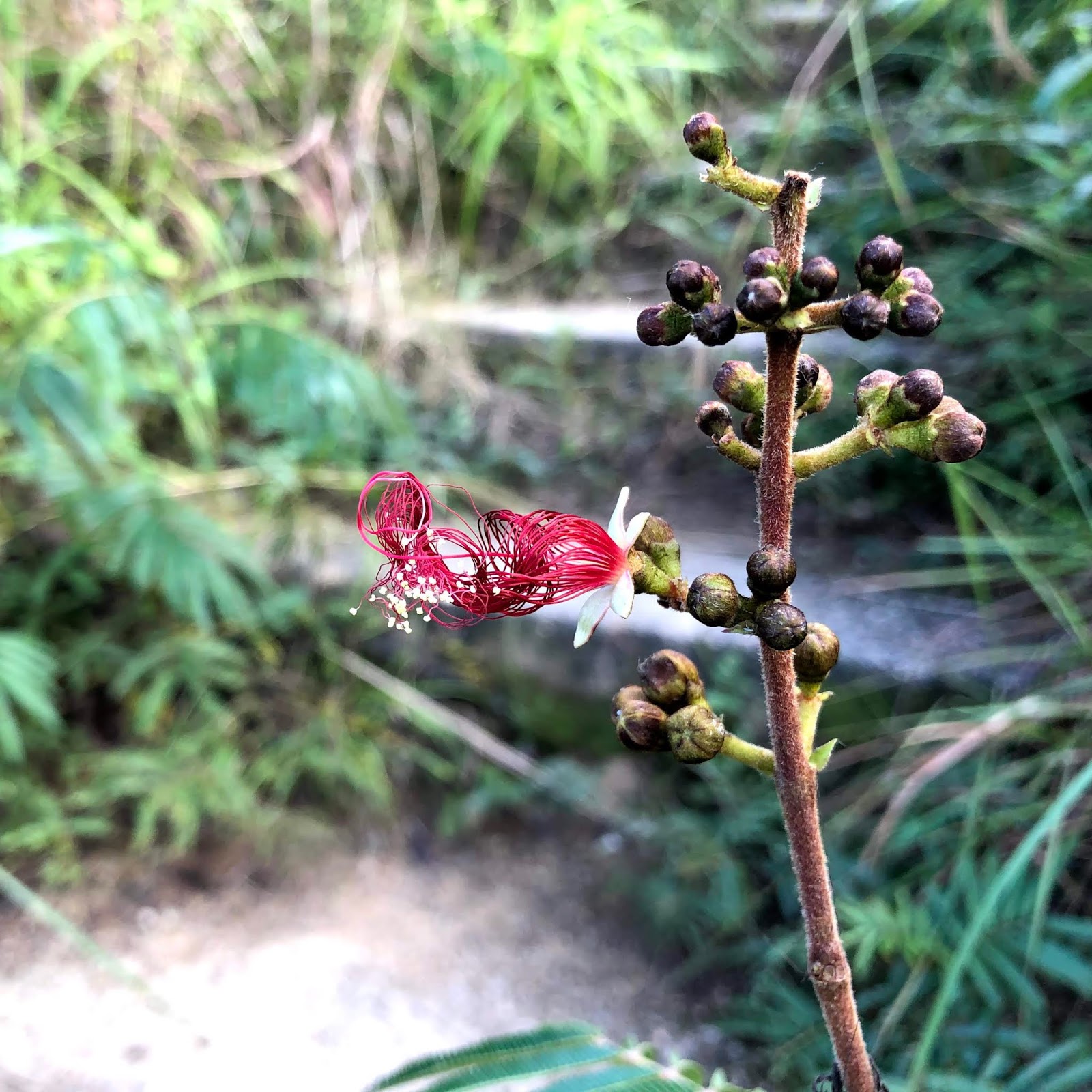
What kind of wildflower is this? 
Waterfall swimming and fish nibbling.


As for the rest of the trip, well, we stayed in a small hotel run by that couple from Colorado right outside of Belize City, and in the layover in Houston ran into an old couple from Texas (also coming back to Belize) who were most likely our second or third cousins. They had the same last name, after all.

And that was the trip!

Saturday, October 5, 2019

Red Hook: this story has a conflict, I promise

At first glance, one would be hard pressed to find a good reason to make the trek to Red Hook. On the far side of Brooklyn, it's nigh inaccessible by subway. In my three years in New York, I've been to the neighborhood just once, for the express purpose of getting key lime pie at Steve's, and as soon as that mission was accomplished we headed straight back (I guess because we're narrow minded people or something).

It was a Sunny Saturday Full of Prospects (and also an early-semester dearth of homework) that got me thinking that today would be a good day to go to Brooklyn-- and not just any part of Brooklyn, but a part of Brooklyn that I couldn't get to in a hurry. Initially, I thought to look for yellow areas on Google maps- places which have the distinction of being "areas of interest." But at the end of the day I decided to go for Red Hook, if only because the name sounded cool.

And what a good decision it was!

The distance from me to Red Hook. If you zoom in on the area- you'll see- no yellow.

There is, of course, a central conflict in this story. And that conflict begins and ends with my phone battery's inexplicable inability to retain any sort of charge above 5%. The past two weeks or so, I've had to recharge my phone up to three times in a single day. Sometimes I can see the battery life leaking from the upper right hand corner before my very eyes. Dealing with my feeble phone and its vital photo/Google map capabilities was going to be the biggest obstacle of the trip.

So armed, with my phone charger and a full tank (which promptly fell to 90%), I set out.

To maximize my time on the ferry, I decided to take the ferry starting from 90th street on the east side. You might be familiar with the fact that going crosstown in Manhattan is an utter nightmare. That part of the journey alone was forty minutes. With my phone's battery quickly depleting (I was stubbornly listening to music- who was I if I couldn't commute in the city with my earphones sullenly in?) I tried to memorize the route just in case.

The ferry was more timely than expected, and I found that the gods had a sense of humor when the only plugs in the ferry were downstairs in the indoor area. With a phone battery already at 30%, I stubbornly went upstairs- what, after all, is the point of taking a ferry if you can't feel the raging wind and blistering sun on your face?

Disembarking at Red Hook, I was greeted with what seemed to be a run-down, industrial neighborhood. All the buildings looked like converted factories and warehouses, red brick crumbling onto cracked sidewalk.

Ohh so aesthetic

I was just thinking to myself that this, perhaps, was the reason Red Hook wasn't marked in yellow on the map, when I started walking down Van Brunt Street. Underneath the run-down facade were cool-looking bars, restaurants, and cafes, unadorned and under the radar to all but those who knew where to go. By this time, it was 2 pm and I was starving.

Decided to stop for a quick lunch at Fort Defiance (a delicious BLT with heirloom tomatoes), and thankfully the bartender behind the counter (actually friendly) offered to charge my phone behind the counter- we were back up to 70%!

After lunch, I walked down the street towards the silvery shine that could only be the water. When I finally got to the edge (after stopping in the huge Fairway), I found a heartbreakingly lovely walkway by the water.


And the most impressive thing about this walkway was not necessarily the beautiful views of the water (I mean, it was a beautiful day after all) but the fact that there were no people there. Think of it: New York City on a beautiful sunny warm Saturday afternoon and there was nobody on a clear walkway by the water. It was almost eerie.

Almost eerier was the friendliness of the people I ran into the Waterfront Museum. As a friendly man inside informed me (and only me- there was only me and two other curious passers-by inside)-- the museum is an old 100-year-old wooden barge that is now a museum and a theater space.

Waterfront Museum

Continuing on, I walked around a warehouse and saw a mysterious open door. Inside, I found a queer-looking coffee warehouse sort of thing, where a friendly man named Steve showed me around. It turns out the room is a giant communal coffee roaster, and I got to see Steve roast his beans for his one-man coffee company.


Pipe and Tabor Roasting is Steve's company!


So charmed, I continued my way around the waterside park until I found myself heading back towards the same ferry terminus; it turned out my route had been a convenient little loop. I waited about five minutes for the next ferry, hopped on, and let my battery run dead while sitting on top as the sun went down over the buildings.

I said the central conflict of the story was going to be battery life, but I lied. It was all things considered a very conflict-free day, and it turns out that Google maps wasn't so important after all.

Another disclaimer: I realize that the things I did at Red Hook are ostensibly the more tourist-y things to do (even if there weren't any other tourists). Excited to go back and explore a little more thoroughly...

The moral of the story: if you live in this city, visit Red Hook!

Wednesday, September 18, 2019

When love gives you a concussion...

Note: As I was sifting through my old material, I realized that I hadn't published this piece on Little Stone. The below recounts events which happened this time last year. 

My love affair with sailing began my sophomore year of college.

We sail small boats on the sailing team at school, two-person FJs where the skipper drives the boat and deals with the big sail (called the main sheet) and the rudder, while a crew uses their weight strategically to lean (heel) the boat correctly and handles the jib sheet (an auxiliary sheet).

My first day, with the intention of trying sailing once for the heck of it and never doing it again, I got in the water as a crew and expected nothing much. The wind picked up—it was a gloriously sunny day, the water at City Island sparkling blindingly. My very first skipper calmly informed me that we were on a close haul and that I needed to hike—what? Hike? Hike where? — I was frantic, fumbling with the line in my hands—what do you need?? — The boat was tipping, tipping!—I threw my weight to counterbalance—it wasn’t enough— The captain and coach boat trailed behind us on a motorboat, where the captain yelled “stick your butt out!”

So I did. With my feet secured under hiking straps, I threw my body out of the boat and kept myself upright with my quads, my butt and back just inches above the water we were racing over. The boat slowly righted. Everything fell into place. I felt the sun on my face, the spray of water on my shorts, the rough jib sheet in my hands as I pulled to keep the sail taut and the boat balanced.

Suddenly, inexplicably, I was in love.

A year of eager days on the water later, I was back on City Island that grey choppy day, the remnants of storms sending sporadic rain to hit our faces. A dearth of skippers led to the coach deciding that it was high time for me to learn how to skipper, despite my relative inexperience. I was excited—a whole two-to-three hours driving a boat! And for the first hour and a half or so practiced losing all my speed on tacks, hopelessly tripping in the boat, alternately losing hold of the rudder and the mainsheet, and generally bumbling around trying to get the boat to actually move in 10-15 knots of a healthy breeze. We didn’t capsize, which was my goal.

Downwind is tricky for the skipper: with wind constantly filling the sheets, deciding when to gybe (or to turn the boat by moving the stern through the eye of the wind) requires decisiveness and a clarity of intention. During a gybe, the boat needs to stay as still as possible while the boom (a long metal pole parallel to the boat which is attached to the bottom of the mainsheet) swings to the other side.

We were gybing on the coach’s whistle. It was wickedly punishing cycle. I’d gain a little speed as the wind filled my sheets—there was the whistle! —pull the rudder towards me (too much, as I was later informed), and keep myself flat on the boat to wait for the boom to swing over—aha!— and jump back up the steady the boat and try to gain back all the speed we’d lost (by that point—all of it).

In my overwhelming arrogance this inefficient method which had worked for the first few gybes, I was convinced, would continue to work. I could time the boom going downwind despite the fact that there was no clear way to tell when it would come over. How clever of me, to avoid manually pulling the boom myself by yanking on the lines connected to the mainsheet, like all the experienced skippers were doing.

Fourth gybe—I was flat on the boat, eying the boom and waiting for it to do its deadly swing over. The boom, like the head of a daffodil, was delicately bobbing back and forth—was it coming? Was it coming? —the cold rain hitting my face I was like a gopher peeking out of its hole when I cautiously lifted my head from my prone position, keeping my eyes on the boom.

It wasn’t coming over. I moved to sit myself back on the boat, taking the time to look over at the coach boat behind us and— WHAM.

The boom did not feel like a daffodil when it nailed the back of my head.

I was dazed. Miraculously, I continued steering the boat straight. My crew asked anxiously if I was okay. I felt okay—no bumps, no bleeding. It was all going to be just fine.

The next day I woke up with a headache. The fuzzy feeling in my head felt like a million cotton balls stuffed behind my eyes and got worse over the weekend. I couldn’t admit to myself that I had a concussion until I attended a midterm review session for one of my favorite classes, abstract algebra, only to find that the construction of concepts that had been solid and unshakable only a few days ago had crashed like a Jenga tower. I was Charlie Brown, except my parents were paying too much money for me to hear the professor go “wah wah wah.” I left the review session, cried my eyes out, and headed to the ER.

It’s a fascinating experience, having a concussion while attending college, where my only obligation—literally—is to use my brain. Medical professionals advise that concussed individuals should refrain from reading, using electronics, and studying. My three biggest pastimes, all at once forbidden!

Homework and exams had to be put on hold. For the first few days, all I was able to do after sleeping the requisite 11+ hours was lie in bed, trying to meditate through a head full of cotton. Sometimes I even managed to doodle.

I won’t go into the details of my recovery, but suffice to say that I missed the entirety of the rest of the fall sailing season.

As the days get shorter and winter begins, I’m left to reflect on the tumultuous season and sailing’s role in my life. Balancing love through trauma is the big lesson here. Plenty of football players can attest to how hard it is to stay out of the action when you’re injured. I’m in a more precarious position. The honeymoon period of sailing has come to an abrupt end, and reality has set in. I haven’t been on the water since the day I became concussed, and to some degree that scares me. Will I be able to go back? Will I get hurt again? Will my fear stop me from pursuing something that I’ve loved (and hope to still love?)

The obvious answer should be no. But unlike a footballer -- I'm not that great at sailing, and probably don't need a lot of motivation to give up. For now, until next fall when I return to campus after a semester of studying abroad, I hope that distance will give me some perspective on my relationship with sailing. And that I won't give up. 

That's me skippering! 


Saturday, August 17, 2019

The Great Yankees Game of Summer 2019

This is August, and reflecting back on a busy summer of interning in the city and canceling plans to go to the beach because of erratic thunderstorms, the one thing I definitely don't want to forget is a balmy Saturday night in June.

Specifically, my boyfriend's second cousin once removed, of all people, had invited us to, of all things, a baseball game.

I mean it IS allegedly a big deal to go to a Yankees game as they are allegedly a better team than the Mets, and I AM grateful that the experience was sponsored (can't imagine how I would have reacted if the bf had asked me to pay out of pocket). And it WAS an experience.

I don't know if I've made it obvious yet, but I don't know anything about baseball or the Yankees. I insisted that bf and I eat dinner beforehand, because if baseball stadiums are anything like movie theaters, then I knew it was going to be a racket.

As it turned out, it wasn't a racket - it was an absolutely horrific scam. I'm pretty sure a single beer was something like $17.

Anyway, we filed in (I had worn a navy shirt with stripes which happened to be the pattern of the Yankees, which I felt pretty proud about) and sat in our little seats high above the diamond or whatever. It was in this time, before the game started, that I learned that the guy who stands behind the batter is actually pretty important and not just the ball-catching gofer. Like I thought he played an equivalent role as the parent in a kids' soccer game who runs and gets the soccer ball when it goes out of bounds.

Oh, also: the people we were playing against were the Astros. From Texas. Houston? I don't really know.

So, armed with plenty of knowledge about innings and balls and whatnot, I was feeling pretty good about things when the newscaster started screaming "it's... TANAKA TIME." It was all very exciting. I think in that moment I decided that there would probably be very little better than being an announcer who got to scream fun slogans at an audience going crazy.

The craziness ended pretty abruptly when absolutely nothing happened in the first... I forget exactly how many but it was a lot... innings. You could feel the audience starting to get a little restless. Two hours in, with zero home runs and another sluggish outfield to infield change, the audience started murmuring and jostling about something.

It was a bird. I kid you not, a hawk on some pole on our side of the field was garnering more attention than the game was. People started taking out their phones and getting excited about this bird.

And then, as if it couldn't get worse, the entire big screen which had been previously focused on the players missing another ball or making some attempt at the bases started filming the bird. I couldn't believe it. As the audience ooh-ed and ah-ed I was trying to sort out how I felt about all this.

See, I had thought that these people had paid money to be entertained by baseball for hours on end, but as it turns out they can be entertained by anything for hours on end. They were entertained by random people kissing (quickly). They were entertained by random people dancing (badly). They were entertained by little kids (looking bored) on their parents' shoulders. And they were entertained by a BIRD. On a POLE. Shouldn't a sport be interesting enough to watch in its entirety if you're going to pay to see it live?? What I couldn't see was: why is baseball this boring??

Near the end of the game, when people started making home runs, it got a little more exciting. But by the time hour four was rolling around and we were approaching the last inning, the game was tied up.

Please. I thought. Please, someone do a home run so I can go home.

Behind me, The Worst Kid in The World was whining to his parents, who had just dropped the bomb on him that they were going to leave before the game ended to make the next train back and avoid the rush. I would have tried to convince bf to do the same, but it seemed like his second cousin once removed was interested to stay through the end. Bad form to up and leave.

"No!" TWKITW screamed. "I don't want to go home! I want to watch the rest of the game! You can't make me!"

I slumped in my seat and tried to cover my ears. Please. I thought. Someone hit the ball.

"I hope nobody hits the ball and it goes overtime! I hope we miss our train!"

Stupid kid. I thought. God, please listen to me instead. Please put me out of my misery.

Nobody was hitting the ball. TWKITW screamed in triumph when the inning ended and the game was still tied up. I would have cried, but I was as dehydrated as a camel's tongue. We had finished our water bottle long ago and I wasn't willing to spend $10 on more. The guy across the row had been methodically shelling peanuts and depositing them around his feet for all four hours, and the sound of the peanuts being cracked was now gunfire to my brain. He looked like he was sitting in kitty litter.

Please, please let anyone win. It can be the orange team. Let's go home. 

Finally, the Yankees (TANAKA TIME) hit a home run. The game was over.

The stadium was well-designed enough to handle the hoard of people going to the subways, and if you stuck out your elbows and kept your cool, then it was bearable to reach the subways, which had a couple of empty trains lined up back to back to take the hoard back to Manhattan.

Bf and I got to the train when it was still empty and watch it quickly fill up with navy and white stripes.

"WE WON!!! NEW YOOOORK! YAASS!" One guy who had clearly indulged in too many $17 beers was celebrating the Yankee victory. It was hard not to be enthusiastic, but I was bone tired. It was near midnight, and past my bedtime.

But we won!

We join the masses at the game.